Where in Spain should you actually live? Seven cities compared for movers, not tourists
Plain Spain editorial team · · 12 min read
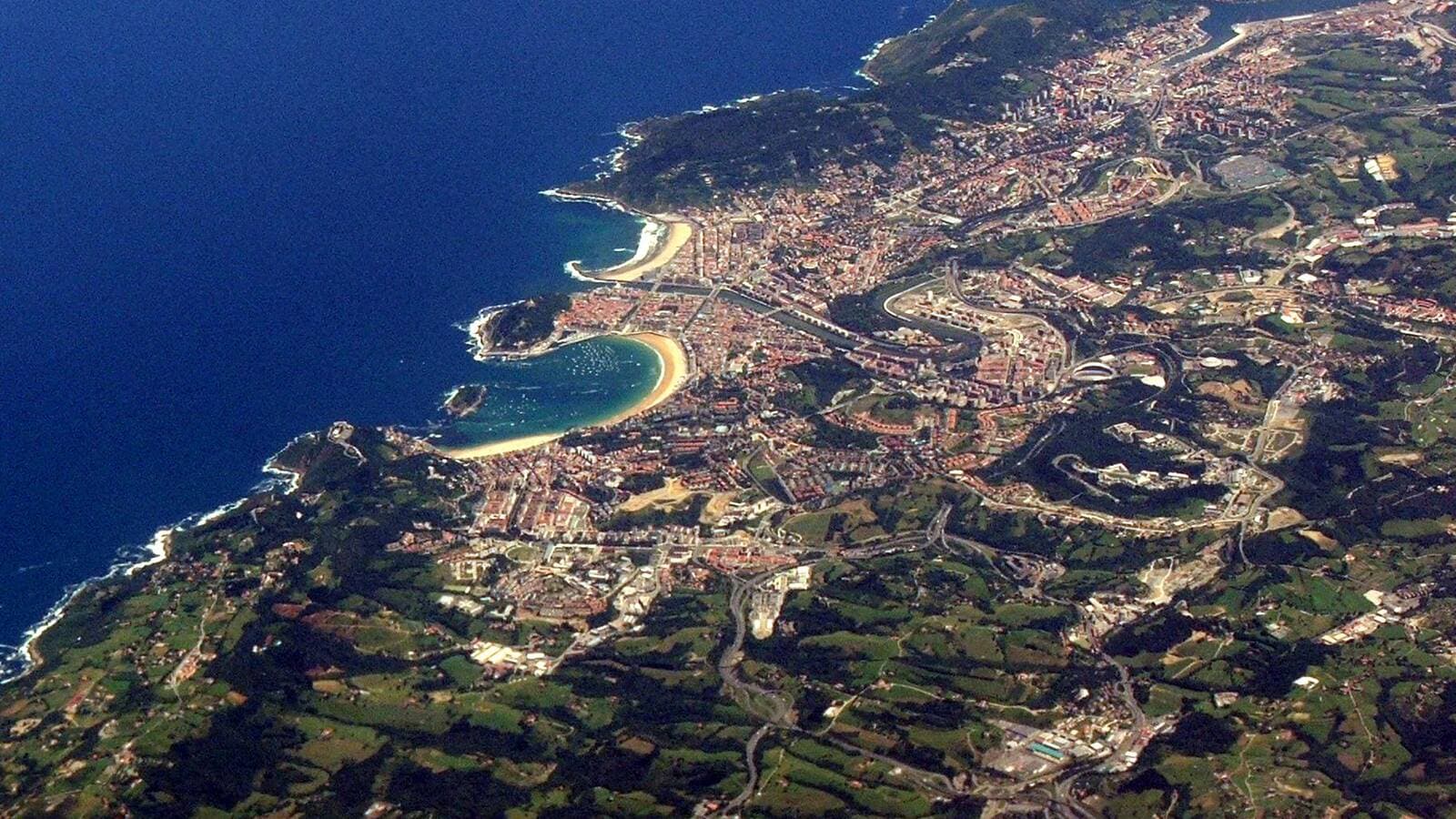
Photograph: Hynek Moravec, via Wikimedia Commons, licensed under CC BY 2.5. Original file.

There is no best city in Spain, only a best match, and the match is decided by about five things that never appear in a holiday guide: whether you can live through August where you are standing, whether the airport gets you home, how hard it is to find a flat, how much Spanish you are willing to learn, and who you will talk to on a Wednesday in February. Rank the seven cities below against those, in that order, and the list shortens fast. Rank them by beauty and everywhere in Spain ties for first.
We help people move here, so we see which cities people arrive in and which ones they leave after a year. That is the angle of everything below: not what a place looks like on a week's holiday, but what it is like on a Tuesday when the novelty has worn off and the boiler has broken.
| City | What it is best at | The catch |
|---|---|---|
| Valencia | A proper city with a beach, flat enough to cycle end to end | Rents climbing fast, and a heavy, humid August |
| Madrid | A career built in English, and long-haul flights from the door | The hardest rental market in Spain, and no coast to escape to |
| Barcelona | International work, with mountains and sea in one weekend | Cost, competition for flats, and the tourism load on the centre |
| Málaga | Winter sun with a city attached, and the south's busiest airport | Housing that never caught up with the boom |
| Seville | Living in Spanish rather than inside an expat bubble | Three months of heat you plan your life around |
| Alicante | The lowest rents per square metre of any coastal city here | A smaller city: fewer specialists, and thin winter flights |
| Bilbao | Summers you can work through, and public services that work | Around 1,200 mm of rain across some 170 days a year |
What actually decides where you should live?Link to this section
Five tests, applied to any city on your list.
Start with August, because Spain's summer decides more relocations than anything else on this list. Inland cities are extreme: Seville's own record is 46.6°C, set in July 1995, and the high thirties into the low forties are routine every July and August since. Coastal cities are hot but survivable, because the sea keeps the nights bearable. Ask yourself honestly whether you would work through that, or whether you would need to leave for six weeks a year and pay for somewhere else while you did.
Then the airport. If you have family elsewhere, or clients who occasionally expect you in a room, this is not a detail. Madrid and Barcelona have long-haul networks. Málaga and Alicante have enormous short-haul networks and workable connections onward. Valencia, Seville and Bilbao are one hop from a hub, which costs you half a day in each direction.
Housing is the test that has changed most. Rents in Madrid, Barcelona, Valencia and Málaga have risen hard while the number of long-term flats on the market has shrunk, and it is now a national political argument rather than a local grumble. Tenants' unions filled Spanish streets over it through 2025 and 2026. What this means for you: budget more time than money. Flats let within days, agencies ask for paperwork you may not have yet, and the best ones never reach the listing sites.
Language is simpler than people fear. In Madrid, Málaga, Seville and Alicante, Spanish is the only language you need. Valencia and Barcelona each have a second one, Valencian and Catalan, and both are a real part of school, signage and local government. Nobody will refuse to speak Spanish to you. But if you have children heading for a state school, look at the language of instruction before you sign a lease rather than after.
Last, February. Every Spanish city is pleasant in May, and the question is whether you have anyone to see when the terraces are empty and it is dark at seven. Some cities have a large, easy-to-join population of people who also moved. Others expect you to build a life in Spanish from scratch. Neither is wrong, but knowing which one you are choosing saves a lonely winter.
One more test only matters if you have children. School places are allocated by catchment, and in the cities with a second language the state system teaches largely in it. Private and semi-private schools exist everywhere and international schools cluster around Madrid, Barcelona, Valencia, Málaga and the Alicante coast. If schooling is part of the decision, it belongs at the top of this list rather than the bottom, because it narrows a city to a handful of districts before you have looked at a single flat.
And one nobody thinks about until it bites. Every city runs the same national health service, but the appointments you need first (registering on the town hall roll, a foreigner's identity number, a social security number) are issued by local and regional offices with their own queues. Big cities have more capacity and more demand; smaller ones have fewer slots but shorter queues for them. This is not a reason to choose a city. It is a reason not to be surprised by the first two months.
Should you move to Valencia?Link to this section
It is the city most people on our books are choosing right now, and the reasons are unglamorous: a proper city with a beach, flat enough to cycle end to end, and still cheaper than Madrid or Barcelona for a comparable flat. The old riverbed running through the middle is a nine-kilometre park, which is the single best piece of urban design in Spain and the reason Valencia feels calm at a size where other cities feel pressed.
It fits remote workers, families, anyone who wants a coastal life without giving up museums and hospitals. If you work for a company outside Spain, the Digital Nomad Visa is the route most of these arrivals take.
The catch: the rest of the world worked this out at the same time you did. Rents have climbed sharply, the popular neighbourhoods are competitive, and August is heavy and humid. There is also the memory of the October 2024 flood in the towns south of the city, which shaped how residents now read a rain warning.
We have written the long version: living in Valencia, and what to see if you are scouting it.
Is Madrid a good place to live?Link to this section
It is the one city in Spain where you can build a career in English and never think about the sea. It has the jobs, the flights, the hospitals, the art, and a nightlife that starts when other cities are going to bed. It is also, and this surprises people, a very liveable city at ground level: neighbourhoods are dense, walkable and specific, and the metro is the best in the country.
It fits anyone whose work needs a market rather than a laptop, people who want a big city and do not care about a beach, and anyone with regular long-haul travel.
The catch: the rental market is the hardest in Spain, the summer is dry and punishing with no coast to escape to, and the city is expensive in a way that creeps rather than shouts. See what to look at on a scouting visit.
Is Barcelona worth what it costs?Link to this section
On any honest reading it is the most complete city in Spain: sea, mountains, architecture, an international airport, and a working economy that is not only tourism. It is also the city most visibly at war with its own popularity. The council is withdrawing every tourist-flat licence by November 2028, a measure that survived a constitutional challenge, and it exists because residents were being priced out of their own neighbourhoods.
It fits people who want a genuinely international city and are prepared to pay for it; anyone in tech, design or research where Barcelona has real clusters.
The catch: cost, competition for flats, and a tourism load that makes parts of the centre unpleasant to live in. Catalan matters more here than most newcomers expect. If you are torn, we compared them directly: Valencia or Barcelona, and here is Barcelona for a scouting trip.
Who does Málaga suit?Link to this section
Remote workers who want winter sun, retirees who still want a city rather than an urbanisation, and anyone who flies often. Ten years ago this was a place you drove through to reach the beaches; it is now a small city with a serious museum habit, a functioning tech sector, and a winter that barely registers as one. The airport is the south's front door, busier in 2025 than Seville and Valencia put together, and the high-speed line puts Madrid within reach for a meeting and back the same day.
The catch: it got popular faster than it built housing. The council imposed a three-year freeze on new tourist-accommodation licences across all residential land in 2026, which tells you how tight the market became. Summer on the coast is crowded and the beach city in August is not the city you visited in March. More here: Málaga for people who might stay.
Should you live in Seville?Link to this section
It is the most Spanish-feeling large city on this list, and the one where your Spanish will improve fastest, because you will need it. Life is lived outdoors and late, the centre is genuinely beautiful rather than photogenic, and the cost of a flat is closer to reasonable than anywhere else of this size.
It fits people who want to live in Spanish, not in an expat bubble; anyone whose income comes from outside the city, since the local job market is thin.
The catch is the summer. Not warm: closed shutters, empty streets, and three months of heat you plan your life around. Ask anyone who has done a July there. And the local economy leans on tourism and administration, so if you need to earn locally, look hard before committing. What to see, and when not to go.
Is Alicante the value option?Link to this section
It is, and it is the one people dismiss because the only part of it they have seen is the airport. Alicante is a working port city built around Mount Benacantil, with the Santa Bárbara castle on top of it and the Postiguet beach directly underneath. Behind that sits El Barrio, the old quarter climbing the hill in painted houses, and in front of it the Explanada, a marble promenade the city genuinely uses rather than photographs. Playa de San Juan, the long beach people picture when they hear the name, is twenty minutes out on the tram.
Rents per square metre are the lowest of any coastal city here, though cheapest is relative and Alicante followed everywhere else with a rise of roughly eight per cent over the past year. The airport, Alicante-Elche, handled just under twenty million passengers in 2025, its busiest year on record. That is a large route map and an overwhelmingly northern-European holiday one, which matters when you want a Tuesday flight in February. The high-speed line reaches Madrid in about two hours twenty. The narrow-gauge coastal tram runs north to Benidorm in a little over an hour and on to Dénia with a change at the far end.
It fits people whose budget is the binding constraint, remote workers who want the Mediterranean without Barcelona prices, and anyone who wants a city small enough to cross on foot.
The catch: smaller city, fewer specialists. The hospitals are good and for anything unusual you still travel to Valencia or Madrid. Flights are plentiful in July and thin in January. And the coast either side is a chain of holiday towns that empties out in winter, which can feel bleak if you settle in one of those rather than in the city.
Is Bilbao worth the rain?Link to this section
It is the outlier on this list, and the one people rule out before they have been. Northern Spain is green because it rains, and Bilbao takes around 1,200 mm of rain across roughly 170 days a year, spread through the calendar rather than saved up for one season, with autumn the wettest stretch. In exchange you get a compact, well-run city that spent thirty years rebuilding itself along the river, from the Guggenheim to the Abandoibarra bank behind it. Summers stay workable without leaving town, which is more than the southern cities here can say.
The food is what keeps people. The pintxos bars under the arcades of Plaza Nueva and along Calle Ledesma are an ordinary weekday habit rather than an outing, the Mercado de la Ribera is still where people shop, and the Azkuna Zentroa, a wine warehouse converted into a pool, cinema and library, works as the city's living room. The coast is on the metro: Getxo, Plentzia and the surf at Sopela are half an hour out.
It fits anyone whose deal-breaker is heat rather than cold, and people who would trade size for public services and a city that works.
The catch, past the weather: the Basque Country runs its own tax system under the Economic Agreement, so Bizkaia sets and collects income tax through its provincial council instead of the national one, and general advice about Spanish tax needs checking against local rules before you rely on it. Euskara is a serious presence in state schooling, and which teaching model you choose matters if you have children. The airport at Loiu passed seven million passengers for the first time in 2025, healthy for a city this size and still one hop from a hub for anything long-haul. Fewer foreign arrivals means a warmer welcome and a steeper social climb at the same time.
How do you test a shortlist without moving twice?Link to this section
Visit in the worst month rather than the best one, rent short before you rent long, and do the paperwork sequence on paper first.
Start with the worst month. For the south and the interior that means August; for the north, February. A city you still like in its worst month is a city you can live in.
Then rent short before you rent long. Take somewhere for a month or two in the neighbourhood you think you want, and spend that time walking to the supermarket, the health centre and the nearest station at the hours you would actually use them. Almost everyone who regrets a neighbourhood chose it from photographs.
Last, do the paperwork sequence on paper first. Where you live changes which regional office handles your registration, how long an appointment takes, and which documents get asked for twice. Our moving to Spain checklist sets out what has to happen before you fly and what waits until you land.
When the answer is "longer than a holiday"Link to this section
If your shortlist is really a plan, the next question is not which city. It is which permit lets you stay, and what that permit asks you to prove: income, insurance, a clean record, and documents translated and legalised. Most people arrive on one of two routes, and the right one depends on where your money comes from rather than where you want to live.
That part we can answer in a couple of minutes: check which visa fits. Then pick the city, knowing what it costs you in paperwork.