Best places to visit in Barcelona beyond the postcard
Plain Spain editorial team · · 9 min read
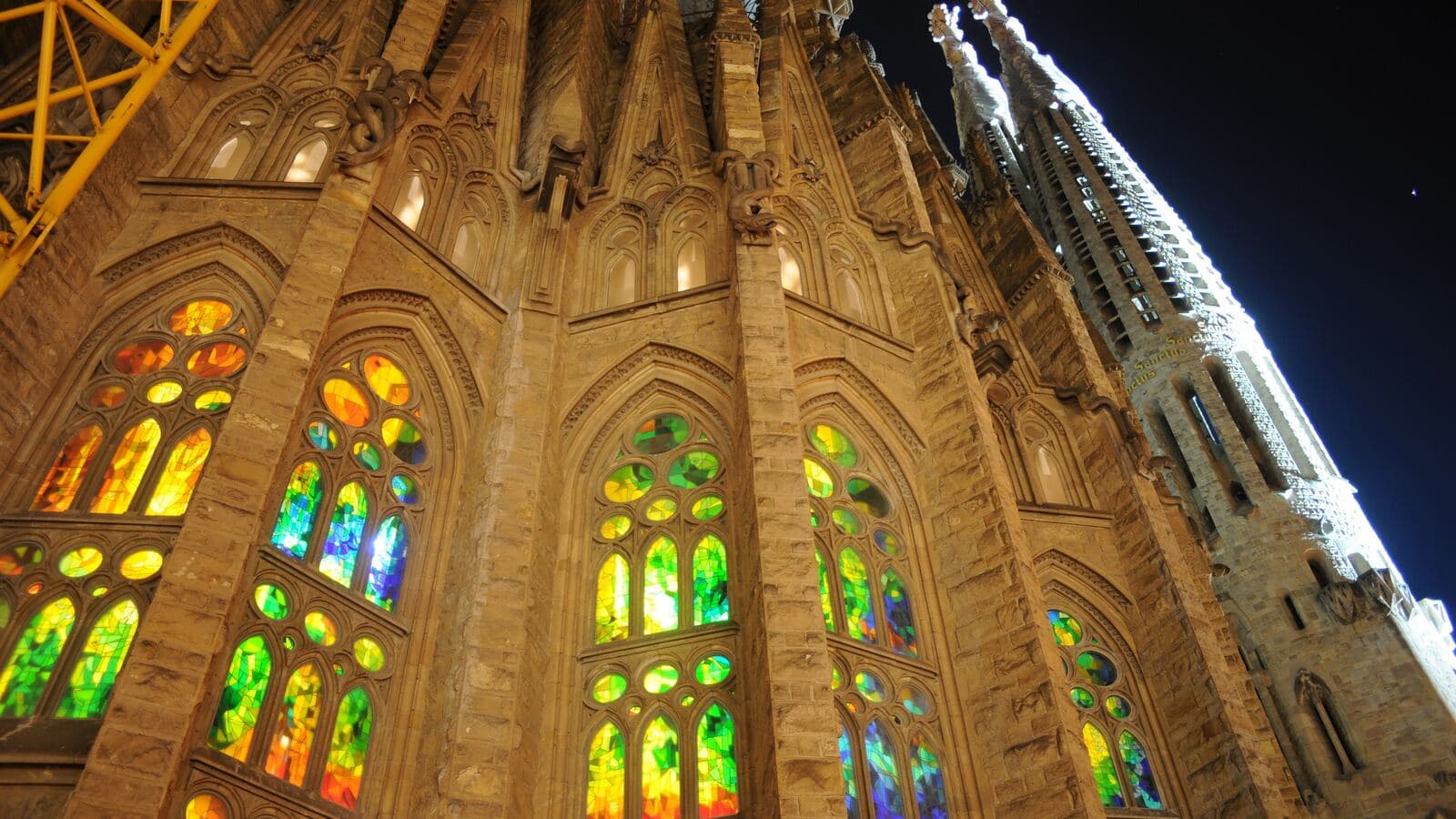
Photograph: Jcca76, via Wikimedia Commons, licensed under CC BY-SA 4.0. Original file.

Book the Sagrada Família before you book anything else, give Park Güell a timed slot or skip it, spend your best day on Montjuïc rather than on Las Ramblas, and put at least one afternoon in Gràcia or Poblenou, which is where you find out whether you could live here. That is the whole plan. Barcelona rewards people who decide in advance and punishes people who wander into the centre hoping for a table.
The city is in an unusual moment. The Sagrada Família finished the external works on its central tower in February 2026, making it the tallest church in the world at just over 172 metres, in the same year as the centenary of Gaudí's death. At the same time the council is winding down every tourist-flat licence by November 2028, because residents were being pushed out of their own neighbourhoods. You are visiting a city that is simultaneously at the height of its fame and openly negotiating what to do about it. Both facts will shape your trip.
Which Gaudí buildings are worth the ticket?Link to this section
The Sagrada Família without hesitation, then one of Casa Batlló or La Pedrera, and Park Güell only if you have a timed slot in hand.
The Sagrada Família is the one thing here that is worth every bit of its reputation. Gaudí built the nave as a stone forest, with columns that branch overhead, and the coloured glass drags a band of light across it over the course of a day. Tickets are sold online only, they routinely go days in advance, and the official window opens roughly two months ahead. Book the first slot of the morning if you can, and add the tower if heights do not bother you. Do not turn up expecting to buy at the door, because you will not get in.
Casa Batlló and La Pedrera sit ten minutes apart on Passeig de Gràcia and both charge like a museum. If you only do one, Casa Batlló is the stranger, more dreamlike interior; La Pedrera's roof terrace with its chimney sentinels is the better photograph and the better view. Either is more interesting than a bus tour past both.
Park Güell needs a timed ticket for the monumental zone, entry is capped by the hour, and the grace period for arriving late is short and enforced. It is beautiful and it is also the single most photographed place in the city, so decide honestly whether you want the mosaic bench or the view. The surrounding park is free, quieter, and has most of the same view over the city.
One that most visitors miss: Hospital de Sant Pau, a few streets up from the Sagrada Família, is a complete art nouveau hospital campus with pavilions, tiling and gardens, and a fraction of the crowd. If the queues have worn you down, go there instead.
Is the Gothic quarter worth your morning?Link to this section
At eight in the morning, yes; at two in the afternoon it is a crush of people being sold the same fridge magnet. The Barri Gòtic is genuinely medieval in parts and genuinely a theme park in others, and the two are a hundred metres apart.
The cathedral cloister with its geese, the Plaça del Rei, the Roman wall fragments and the small squares at eight in the morning are worth your time. The main pedestrian arteries at two in the afternoon are a crush of people being sold the same fridge magnet.
Cross into El Born instead, which has the same age and half the traffic: the Santa Maria del Mar basilica, the Picasso Museum, and streets narrow enough to stay cool. And treat Las Ramblas as a route rather than a destination. La Boqueria market is still a real market at its edges and a smoothie stand at its front; go early, walk to the back, and buy from the stalls that residents queue at.
Which Barcelona neighbourhoods should you actually walk?Link to this section
Four, and none of them is in the centre: Gràcia, Poblenou, Sant Antoni and Sarrià. They answer the question a visit is really asking, which is whether you could live here.
| Neighbourhood | What it is like | Who ends up there |
|---|---|---|
| Gràcia | A separate town the city grew around: small squares, low buildings, independent shops | Newcomers who fall for it, and can pay the rents that follow |
| Poblenou | Converted factories, tech offices, art spaces and a calm stretch of beach | People who want space and do not need the old town on their doorstep |
| Sant Antoni and Eixample Esquerre | The grid at its most liveable, with superblock junctions handed back to people on foot | First movers who want everything walkable |
| Sarrià | Quieter, greener, further up the hill and dearer for it | Families, once the noise has won |
Gràcia was a separate town until the city grew around it, and it still behaves like one: small squares with terraces on them, low buildings, independent shops, and a festival in the middle of August when residents decorate the streets themselves. It is the neighbourhood most newcomers fall for, and it has the rents to prove it.
Poblenou is the old industrial quarter, now a mix of converted factories, tech offices, art spaces and a long, unglamorous main street with proper local life on it. It is close to a stretch of beach far calmer than Barceloneta, and it is where the city's future is being argued about most visibly.
Sant Antoni and Eixample Esquerre give you the grid at its most liveable: wide streets, a restored market hall, and a superblock scheme that closed several junctions to traffic and handed them back to people on foot. Walk one of those junctions on a weekday evening. It is the clearest picture in Spain of what a city can do with its own streets.
Sarrià, up the hill, is quieter, greener and more expensive, and it is where families end up when the noise wins.
Which beach should you go to in Barcelona?Link to this section
Not Barceloneta. It is the closest beach to the centre, which is precisely the problem: packed from June to September, narrow, and backed by residents who have been protesting about the crush for years.
Take the metro two stops further out to Bogatell, Mar Bella or Nova Icària, and you get more space, better swimming and the same water. Better still, take a suburban train. Twenty to forty minutes north on the Maresme line gets you to small coastal towns with proper beaches and no queue. South, the same trip takes you to Castelldefels or on to Sitges. This is a real advantage of living here that day-trippers never discover.
Montjuïc, the best day in the cityLink to this section
If you have one clear day, spend it on the hill. The Fundació Joan Miró is a beautifully built museum for a single artist and one of the few places in Barcelona where you can stand in front of major work without being jostled. MNAC holds the Romanesque church frescoes, lifted whole from the Pyrenees, which are unlike anything else in Europe. The castle at the top gives you the port and the whole coast, and the walk down through the gardens is the correct end to the day. The botanical garden is a quiet Mediterranean hillside with a view.
You can arrive by funicular and cable car, which children enjoy more than anything else on their trip.
What is the best way to get around Barcelona?Link to this section
The metro, on a multi-trip ticket bought at the first machine you see, which is far cheaper than singles. The airport connects by metro on the L9 line, by an express bus into Plaça Catalunya, and by suburban train from the older terminal; the bus is the simplest with luggage. Distances in the Eixample grid deceive people badly: the blocks are long, and what looks like a five-minute walk on the map is twenty. Budget accordingly, and use the metro more than your pride suggests.
For eating, two local habits are worth adopting. The first is vermouth before Sunday lunch, taken standing in an old bodega with an olive and a conversation. The second is the Catalan fork breakfast, a full hot meal eaten mid-morning in workers' bars, which is one of the best and least touristed things on offer and usually finished by noon. Between those, the Eixample and Gràcia are full of small restaurants that fill with residents at half past nine and would rather you booked.
Which day trips from Barcelona are worth the fare?Link to this section
Two, and both are trains rather than tours: Montserrat for the mountain, Girona for the town.
Montserrat is the serrated mountain you can see from the city on a clear day, with a Benedictine monastery lodged halfway up it. A suburban train from Plaça Espanya takes about an hour, and you finish with either a rack railway or a cable car up the rock face. Go for the walking paths above the monastery rather than only the basilica: an hour uphill and the crowds thin to nothing.
Girona is under three-quarters of an hour on the high-speed line, and the fastest services do it in around forty minutes. It gives you a walled old town, one of the best-preserved Jewish quarters in Europe, coloured houses over a river, and a food scene that punches far above the size of the place. It is also the practical gateway to the Costa Brava if you want a proper coastline rather than a city beach.
Do you need Catalan in Barcelona?Link to this section
Not as a visitor, and very much as a resident. Catalan is not a dialect and it is not decoration. It is the language of the regional government, of most state schooling, and of a large share of ordinary conversation, and it sits alongside Spanish rather than beneath it. As a visitor this changes nothing: everyone will switch to Spanish, and in the centre to English. As a resident it changes a great deal, particularly if you have children in the state system. Learning some is a courtesy that gets noticed immediately.
When is the best time to visit Barcelona?Link to this section
May, June, September and early October, and February if what you want is a table. August is hot, humid and busy, and much of the city that is not serving visitors leaves. Winter is mild, bright and by far the easiest time to book anything, which is why residents quietly recommend it.
Whenever you come, skip the tourist-menu paella anywhere within sight of the sea, and skip the flamenco dinner shows, because this is not the city for that. Skip too the fee to stand on a viewing platform when the same view is free from Montjuïc, Bunkers del Carmel or the Tibidabo road.
If you are weighing Barcelona against a smaller, calmer alternative, we compared them directly in Valencia or Barcelona, and the wider field is in seven Spanish cities compared for movers.
If you are here to decide something biggerLink to this section
Visiting Barcelona and living in Barcelona are different projects. The second one runs on paperwork: a residence permit that matches how you earn, health cover, an address registered with the town hall, and a rental market that will test your patience before it tests your budget. None of that should put you off. It should just happen in the right order, starting well before you fly.
The first question is the one worth answering today: check which Spanish visa fits your situation. Everything else, including the city, gets easier once that is settled.