Best places to visit in Madrid when you might be moving there
Plain Spain editorial team · · 9 min read
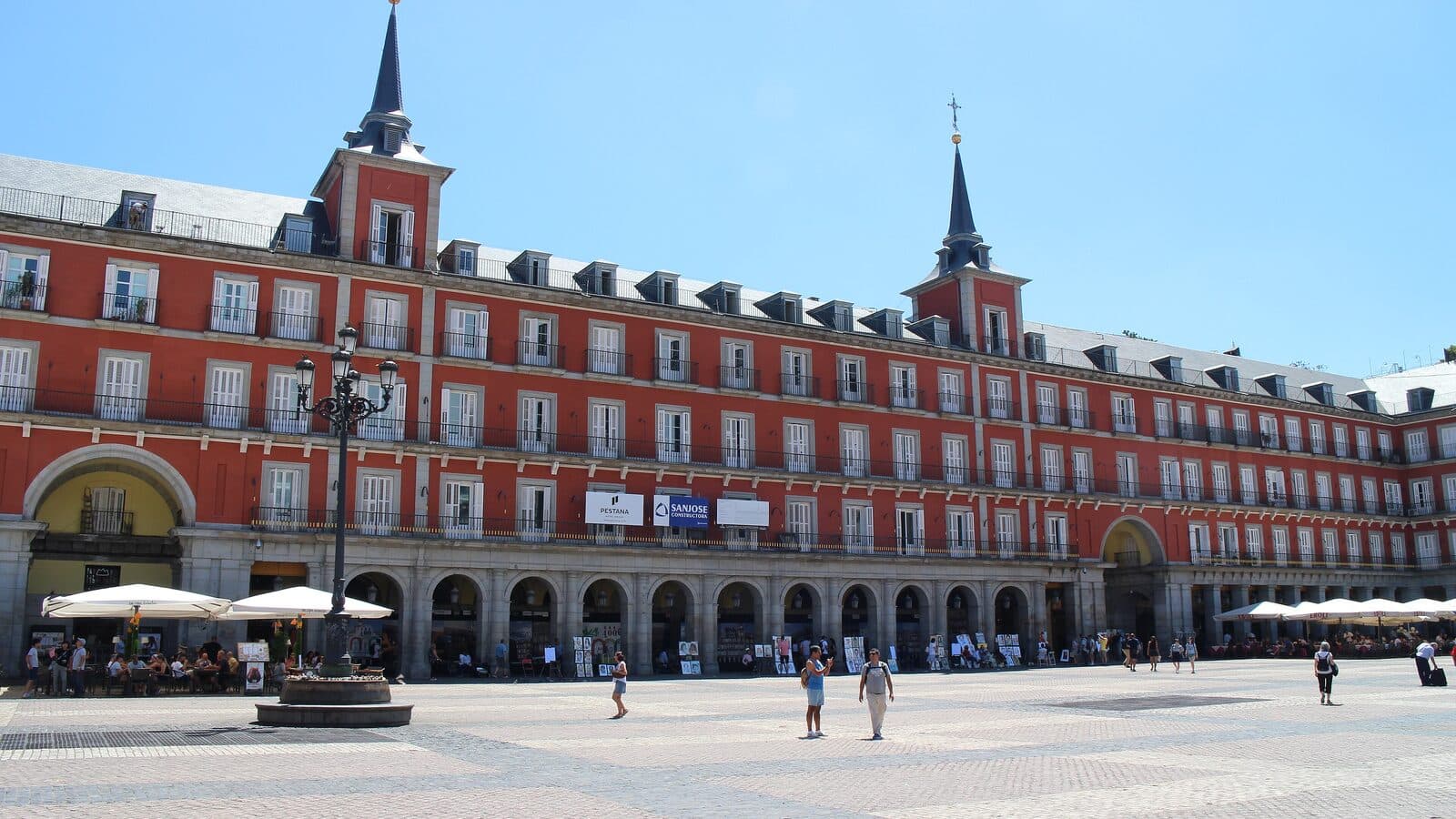
Photograph: Suicasmo, via Wikimedia Commons, licensed under CC BY-SA 4.0. Original file.

If you have three or four days in Madrid, the short answer is: one of the three big museums rather than all of them, an afternoon in Retiro, two or three barrios walked end to end, El Rastro if a Sunday falls inside your trip, and one day trip on the high-speed line. Everything else is a bonus. If part of the reason you are here is to find out whether you could live in Madrid, the barrios matter more than the museums, and this list is ordered accordingly.
Madrid is a city that hides its appeal from visitors. It has no sea, no cathedral anyone crosses a continent for, no single view. What it has is density: neighbourhoods where everything you need sits within four streets, and a public life that spills onto the pavement every evening of the year. That is invisible on a coach tour and obvious after two days of walking.
Which of Madrid's three museums should you pick?Link to this section
One of them, not all three. The Prado, the Reina Sofía and the Thyssen-Bornemisza sit within ten minutes of each other, and trying to do all three in a weekend is how people end up remembering none of them.
| Museum | What you go for | The free window |
|---|---|---|
| Prado | Velázquez, Goya's black paintings, Bosch, and Spanish court portraiture by the room | The last two hours of the day |
| Reina Sofía | Guernica, and it is bigger and stranger in person. Closed on Tuesdays | Weekday evenings and Sunday afternoons |
| Thyssen-Bornemisza | Eight centuries run chronologically through one building | Monday afternoons, permanent collection |
Pick by temperament. The Prado is the serious one: Velázquez, Goya's black paintings, Bosch, and enough Spanish court portraiture to leave you cross-eyed. Go for ninety minutes, see six rooms properly, and come back another day. The Reina Sofía holds Guernica, which is worth the trip on its own and is bigger and stranger in person than any reproduction suggests; the museum is closed on Tuesdays, which catches people out. The Thyssen is the one nobody plans and everybody enjoys, because it runs chronologically through eight centuries in a single building, and you leave with the shape of Western art in your head.
Those free windows are busy and they get adjusted, so check the museum's own page the week you go rather than trusting a list.
Is Retiro worth an afternoon?Link to this section
Yes, and Sunday morning is when to take it, because that is when the park belongs to Madrid rather than to visitors.
Retiro is the obvious answer and it deserves it: a former royal garden in the middle of the city, with a boating lake, a glasshouse worth walking to, and enough shade to survive an afternoon in June.
Two more, if you are testing the city rather than sightseeing. Madrid Río turned the motorway along the river into a long park with pools and playgrounds, and it tells you a lot about how the city has spent its money over the past fifteen years. The Real Jardín Botánico, next door to the Prado, is the quietest place in central Madrid and the correct move when the heat has beaten you.
Which Madrid barrio would you actually live in?Link to this section
Walk five of them, La Latina, Malasaña, Lavapiés, Chamberí and Salamanca, and note which one you slow down in.
La Latina is the old Madrid people picture: narrow streets, tiled bars, Sunday afternoons that start at noon and never quite end. Lovely to visit, loud to live in.
Malasaña is the one that shifted from scruffy to expensive within a decade. Independent shops, small restaurants, a young population, and a noise level that people either feed on or flee.
Lavapiés is the most genuinely mixed neighbourhood in central Madrid, with the food to prove it and a rougher edge in places. It is also where you will hear the housing argument most loudly, because it has been changing fastest.
Chamberí is where a lot of people end up. Nineteenth-century blocks, proper markets, good schools, a metro every four streets, and enough life to be interesting without the weekend crowds. It is the answer for anyone who wants central Madrid and eight hours of sleep.
Salamanca is handsome, expensive and quiet, and it is where you go if you want a large flat and do not need a bar downstairs.
Walk each one between seven and nine in the evening. That is when a Madrid neighbourhood shows you what it is.
What happens at El Rastro on a Sunday?Link to this section
A flea market fills the streets below La Latina all morning, and when it winds down everyone moves into the surrounding bars for vermouth. That second hour is the point.
El Rastro is part flea market, part junk, part people-watching. Arrive by ten if you want to see anything, and treat the stalls as scenery rather than as shopping. The vermouth afterwards is the most Madrid thing there is, and it costs nothing to join.
What is overrated in Madrid?Link to this section
Puerta del Sol, the terraces on Plaza Mayor, the Mercado de San Miguel, and anything on Gran Vía advertising flamenco.
Puerta del Sol is a transport interchange with a plaque in it. Plaza Mayor is worth five minutes and no money at all: the terraces are priced for people who will never come back. The Mercado de San Miguel is a beautiful building selling small expensive things to tourists. Go to the Mercado de Antón Martín, Vallehermoso or your nearest neighbourhood market instead, where the same food is made for people who live here. And the flamenco advertised on Gran Vía is not the flamenco anyone in Seville would recognise; if flamenco matters to you, save it for Andalusia.
Gran Vía itself is worth one walk for the buildings and then avoidance. The good streets run off it.
Which day trips from Madrid are worth the fare?Link to this section
Toledo and Segovia, each about half an hour away on the high-speed line, which is faster than crossing some cities.
Toledo is about thirty-five minutes from Atocha on the high-speed service, which is faster than crossing some cities. It gives you a walled town of Christian, Jewish and Muslim layers stacked on a rock above a river, El Greco where he actually painted, and one of the great cathedrals of Spain. Stay for the evening after the day-trippers leave and it becomes a different place.
Segovia takes about half an hour by train from Chamartín, plus a fifteen-minute local bus into town because the high-speed station sits outside it. You go for the Roman aqueduct, which is still standing in the middle of a working city and still hard to believe, and for the castle that looks like it was drawn for a fairy tale.
Both trips make the same point about living in Madrid: the centre of the country is genuinely well connected, and a lot of Spain is inside a day's reach.
Beyond the triangle, when the queues put you offLink to this section
Three more places that repay an hour. The Templo de Debod is an Egyptian temple, given to Spain in the 1960s and rebuilt on a rise west of the centre, and it is where Madrid goes to watch the sun go down behind the mountains. Matadero, a converted slaughterhouse south of the river, is now the city's largest arts complex and the best evidence that Madrid's cultural life is not confined to three museums and a nineteenth-century idea of itself. CaixaForum, opposite the Prado, has a hanging garden on its side wall and shows exhibitions that are usually easier to get into than anything across the road.
How do you eat like someone who lives in Madrid?Link to this section
Order the menú del día at lunch, stand at the counter rather than sitting at a table, and buy anything you plan to cook at a neighbourhood market.
The single most useful thing to know about eating in Spain is the menú del día: a fixed lunch of two courses, bread and a drink, served on weekdays in ordinary restaurants and priced for people going back to work. It is how the country eats at midday, it is available on almost every street, and it will tell you more about a neighbourhood than any recommendation list.
Beyond that, three habits worth copying. Vermouth before Sunday lunch, poured from the tap in old bars that have been doing it for a century. Standing at the counter rather than sitting at a table, which is faster, cheaper and how the room actually works. And the neighbourhood market for anything you plan to cook. Vallehermoso and Antón Martín are proper working markets rather than food courts with a queue outside.
Madrid is landlocked and eats extraordinary seafood anyway, on trucks that arrive overnight from both coasts. Nobody who lives here finds this strange, and it is one of the small facts that explains the city's confidence.
Is Madrid easy to get around?Link to this section
The metro is the reason the city works. It runs everywhere, it is clean, it is quick, and it reaches Barajas airport directly on line 8, with a suburban train also serving the main long-haul terminal. If you are testing the city as a place to live, ride it at eight in the morning and again at eleven at night, and note that the second one is busy too.
Monthly travel passes cover the whole region rather than a zone you have to think about, and there is a heavily discounted version for under-26s that quietly makes Madrid one of the cheapest European capitals to be young in. On foot, the centre is smaller than the map suggests: Sol to Retiro is a quarter of an hour, and most of what visitors want sits inside an hour's walking triangle.
When is the best time to visit Madrid?Link to this section
May, early June, late September and October, and on no account August.
Winter is cold, dry and often brilliantly clear, and Madrid handles it well. August is the month to avoid: the heat is dry and relentless, there is no coast to escape to, and a good share of the city closes and goes to the coast itself. If August is your only option, plan for museums and pools in the afternoon and life after nine at night, which is what residents do.
For a wider comparison against the other places you might land, we lined up seven Spanish cities for people planning to stay, and there is a companion piece on Barcelona beyond the postcard.
If the visit is really a scouting tripLink to this section
There is a difference between a good week in Madrid and a life here, and most of it is administrative: a residence permit, an address registered with the town hall, health cover, a tax number. None of it is difficult when taken in order, and all of it is easier to arrange before you fall in love with a flat.
If you are already thinking in those terms, start with the shortest question: which Spanish visa you qualify for. The answer takes a couple of minutes and it decides most of what follows.