Best places to visit in Málaga, Spain's other remote-work capital
Plain Spain editorial team · · 8 min read
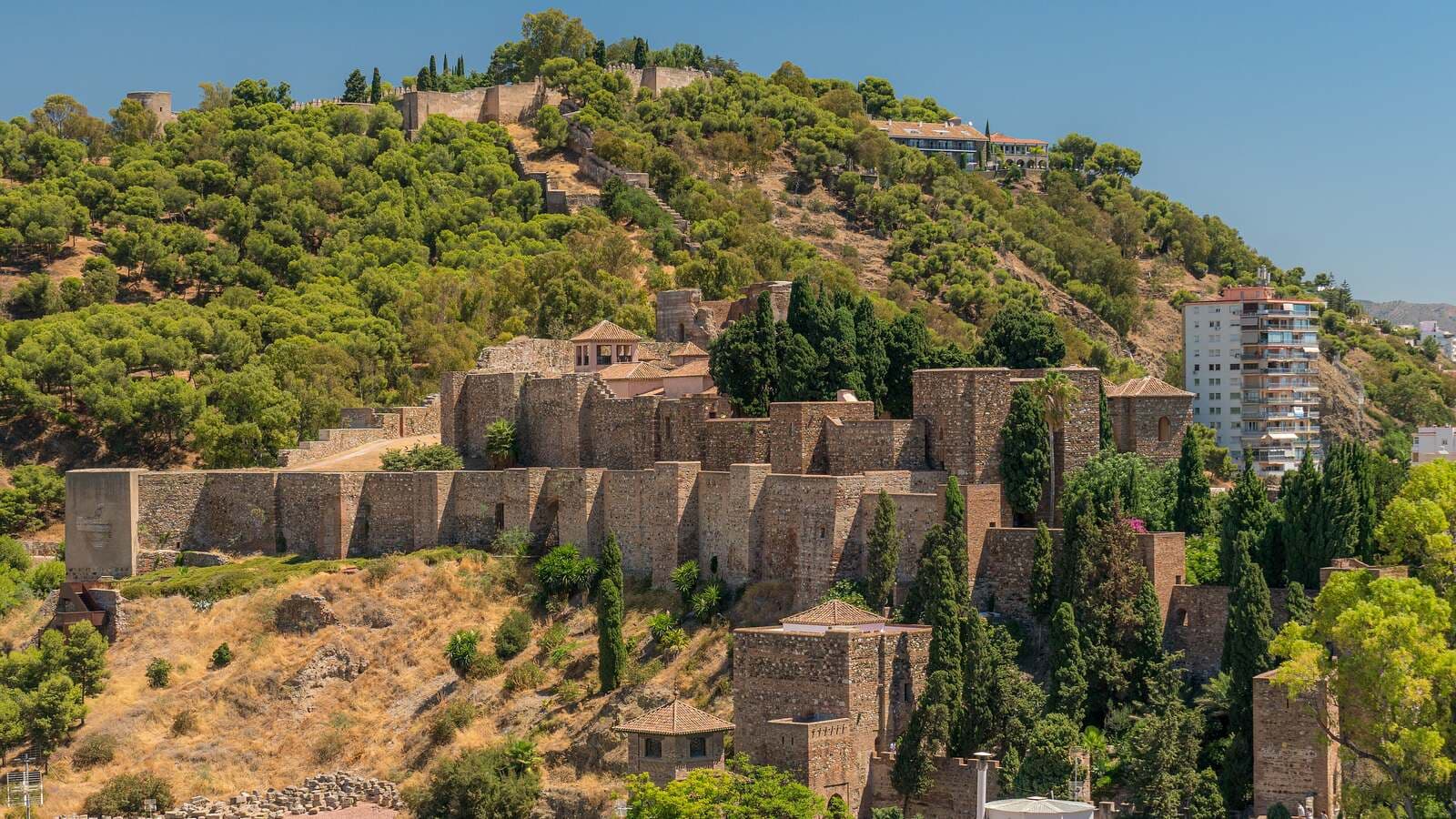
Photograph: Fernando, via Wikimedia Commons, licensed under CC BY-SA 4.0. Original file.

Málaga's short list is unusually easy: the Alcazaba and the castle above it, two or three of the museums, an evening walking the old town, grilled sardines on a beach east of the centre, and one day out at the Caminito del Rey. Three days is plenty, and unlike most Spanish cities you can do it comfortably in January.
That last point is the reason Málaga has changed so fast. It used to be the airport you flew into on the way to somewhere else on the coast. Over the past decade it became a small city with a serious cultural programme, a growing technology sector and a winter that barely registers as one, which is a combination that attracts people who work from wherever they like. What that has done to the city is worth understanding before you fall for it, so it is in here too.
Which Málaga museums are worth your time?Link to this section
The Picasso first, then whichever of the Pompidou or the Carmen Thyssen matches your taste. Not all three: Málaga made a deliberate bet on museums and it paid off better than most cities' regeneration plans, which is a reason to choose well rather than to queue three times.
| Museum | What you go for | Worth knowing |
|---|---|---|
| Museo Picasso Málaga | A restored palace of a couple of hundred works, tracing how the man actually painted | The Casa Natal on Plaza de la Merced is half an hour more |
| Centre Pompidou Málaga | The French museum's first outpost abroad, under a coloured glass cube on the waterfront | Closed on Tuesdays |
| Museo Carmen Thyssen | Andalusian and Spanish painting in a sixteenth-century townhouse | Closed on Mondays |
The Museo Picasso Málaga is the anchor, and it is the right size: a restored palace holding a couple of hundred works that trace how the man actually painted, rather than a greatest-hits parade. He was born a few streets away, and the Casa Natal on Plaza de la Merced is a small, quiet counterpart worth half an hour.
The Pompidou's coloured cube on the waterfront has become the symbol of the whole project, and the closed Tuesday is the classic trap for a short visit. The Carmen Thyssen's Andalusian and Spanish painting is exactly the collection this city should have. Whichever you skip, use the time you save on the hill.
Is the Alcazaba worth the climb?Link to this section
It is the best fifteen minutes of layered history in the city, and the hill above it is the best hour. The Alcazaba is an eleventh-century Moorish fortress-palace climbing the slope directly behind the Roman theatre, and the two together give you a Roman stage at street level, Islamic walls above it, and a Christian city built around both. Inside the Alcazaba the route zigzags up through gardens and gateways designed to slow an attacker, which now slows you down instead.
Keep going up to the Gibralfaro castle for the view along the coast and over the bullring, ideally an hour before sunset. The walk is steep in full sun; there is a bus if the heat makes the argument for you.
The old town, Soho and the portLink to this section
The centre is compact and largely pedestrian. Calle Larios is the handsome commercial spine and everyone walks it, but the interest is in the lanes either side, where the old bodegas pour sweet Málaga wine from barrels for people who have been coming for decades.
The cathedral is known locally as La Manquita, the one-armed lady, because the second tower was never finished. The money went elsewhere in the eighteenth century and never came back. It is worth going in, and worth knowing that the unfinished half is the part residents are fond of.
Soho, between the centre and the port, is the arts quarter, with large commissioned murals on the sides of apartment blocks and a scattering of small galleries and bars. It is the part of the city that most obviously wants to be somewhere else, and it half succeeds.
Muelle Uno, the reworked port, is a promenade of shops and restaurants that residents use for the walk rather than the shopping. Take the walk. Skip the restaurants.
Which beach should you go to in Málaga?Link to this section
Not the one in front of you. La Malagueta is the city beach and it is fine in the way a city beach is fine: close, crowded, and perfectly adequate for an hour.
The better move is east, to Pedregalejo and El Palo, old fishing quarters now absorbed into the city, where the beach bars grill sardines on skewers over a wood fire in a boat filled with sand. The espeto is a genuinely local thing rather than a performance for visitors, it is best between May and September, and an afternoon of it is the single most enjoyable thing to do in Málaga.
Further east the coast improves again around Nerja and the cliffs at Maro, about an hour by bus. West of the city, the resort towns are exactly what you expect.
What should you eat in Málaga?Link to this section
Fried fish, an espeto of sardines grilled on the beach, and a glass of sweet Málaga wine poured from a barrel in an old bar.
Start at the Mercado de Atarazanas, a nineteenth-century iron market built around the marble arch of the shipyard that stood there when the sea came up to the walls, with a stained-glass window at one end showing the old city. The fish counters are the reason to go, and the bars along the side will fry whatever you point at.
The local plate is fried fish, done lightly and eaten straight away, and the local nickname for a Malagueño is the anchovy, which tells you how seriously it is taken. The sweet wine poured from barrels in the old bars is an acquired taste that most people acquire by the third glass. And a chiringuito, the beach restaurant, is where a long lunch is supposed to happen: order the espeto, order the salad, and do not be in a hurry.
Can you live in Málaga in English?Link to this section
On the coast, for months at a time. In the city, less easily and much less wisely.
Málaga province has one of the largest foreign populations in Spain, and on the coast you can go months without needing Spanish. In the city itself that is less true and less advisable. Town hall registration, the health centre, the tax office and your landlord all operate in Spanish, and the version of Málaga available in English is a narrower place than the one next to it.
The practical middle ground, and what most people who stay end up doing: enough Spanish for the admin and the neighbours within a year, and an accent that Andalusia will cheerfully mangle. The dialect drops consonants and speeds up, so a course from home will not fully prepare you, which is an argument for learning here rather than before.
Is Málaga a good base for remote work?Link to this section
Yes on the connections and the winter light, no on the housing, and the housing is the half that decides it.
Málaga's technology sector is not a marketing line. Google's flagship European cybersecurity centre is here, Vodafone runs a research and development hub in the city, and the technology park on the western edge has been growing for years. Alongside them sits a large freelance and remote-working population who chose the place for winter light and a short flight home.
The practical case is strong: the airport is the busiest in southern Spain and moved more passengers in 2025 than Seville and Valencia put together; the high-speed line reaches Madrid in under three hours; the metro now runs into the city centre; and a suburban train links the airport to the middle of town in about a quarter of an hour.
The catch is housing. The boom arrived faster than the flats did, and in 2026 the council suspended new licences for all tourist accommodation on residential land for three years, an unusually blunt measure that tells you how tight the market became. If you are scouting Málaga as a base, look at long-term rental listings before you look at anything else, and treat the shortage as the main constraint rather than an inconvenience.
Which day trips from Málaga are worth the fare?Link to this section
The Caminito del Rey above all, then Ronda, and Granada if you can give it a night rather than an afternoon.
The Caminito del Rey is the reason many people come. A walkway pinned to the wall of a gorge, once notorious and now rebuilt and safe, running a little over three hours end to end with a shuttle bus back. Tickets are released in batches and sell out well ahead; children under eight are not admitted, and everyone over eight needs identification. There is a train to the gorge from Málaga, which makes it one of the rare Spanish day trips that is easier without a car.
Ronda sits above a gorge of its own, two hours inland on a scenic railway line, and is the one town on the standard Andalusian circuit that lives up to its photographs. Granada, with the Alhambra, is about an hour and a half on the direct train, though only a few of those run each day, and it deserves a night rather than an afternoon.
When is the best time to visit Málaga?Link to this section
February to June, and September to November. Winter here is warm enough to spend outdoors, which makes January a serious proposition rather than a compromise. August is hot, full and expensive, and the city belongs to holidaymakers.
One date worth putting in a diary early: on 2 August 2027 a total solar eclipse crosses the far south of Spain, and Málaga sits inside the band, with a little under two minutes of totality shortly before eleven in the morning. Places on the Cádiz side of the strait get considerably longer. Accommodation across the south will be gone long before the date, and we set out what to expect and how to plan in Spain's eclipse run.
For how Málaga compares with the other places people move to, see seven Spanish cities compared for movers.
If you are weighing up a moveLink to this section
Most people who end up living in Málaga arrive on one of two long-stay routes: one for people who work remotely for companies outside Spain, and one for people living on savings or passive income. Which fits you depends on where the money comes from, and the answer shapes everything else: the timing, the documents, and the order you do things in.
Find out where you stand before you start looking at flats: check which Spanish visa fits your situation.