Day trips from Valencia that are worth the train ticket
Plain Spain editorial team · · 8 min read
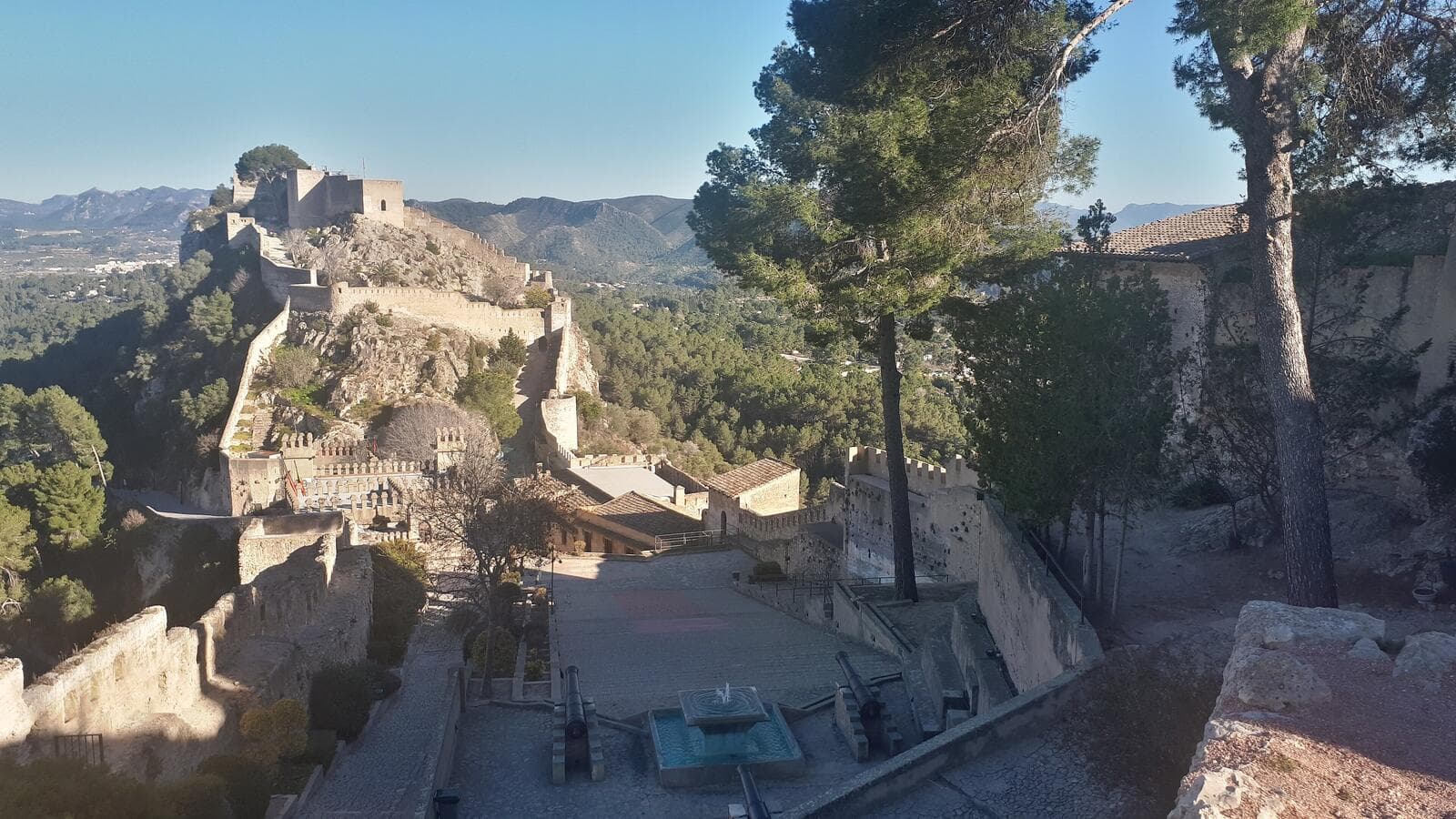
Photograph: Donarreiskoffer, via Wikimedia Commons, licensed under CC BY-SA 4.0. Original file.

The best day trip from Valencia is the Albufera. It costs about what a coffee costs, and it takes a city bus. After that, the commuter rail gets you to a hilltop castle in under an hour and a Roman theatre in half of one. Everything below is reachable without a car unless we say otherwise, and where a connection is currently broken we say that too, because one of the routes in older guides no longer runs the way those guides describe.
Which Valencia station do you need?Link to this section
Estació del Nord for the cheap Cercanías commuter lines, and València Joaquín Sorolla, a few minutes' walk away, for the high-speed AVE. Valencia has two stations next to each other and they are not interchangeable.
Estació del Nord is the old modernista terminus in the centre, and it handles the Cercanías commuter lines: C-1 south along the coast to Cullera and Gandia, C-2 inland to Xàtiva, C-6 north to Sagunt and Castelló. These are cheap, frequent and need no reservation. Turn up, buy at the machine, get on.
València Joaquín Sorolla, a few minutes' walk away, handles the high-speed AVE services. Those need booking and cost several times as much.
One caveat that matters in 2026. The C-3 line inland was badly damaged by the flood of October 2024, and two years on the section beyond Buñol towards Requena and Utiel was still being covered by replacement buses rather than trains, with no restoration date announced. Check the day before you travel rather than trusting a route map.
| Trip | Each way | How you get there |
|---|---|---|
| L'Albufera and El Palmar | Under an hour | EMT bus 24, from near Estació del Nord |
| Sagunt | Half an hour | Cercanías C-6 |
| Cullera | 35 minutes | Cercanías C-1 |
| Xàtiva | About an hour | Cercanías C-2 |
| Gandia | A little over an hour | Cercanías C-1, to the end of the line |
| Requena | 25 minutes | AVE from València Joaquín Sorolla, then a local bus |
| Peñíscola | Two to two and a half hours | Train to Benicarló-Peñíscola then a local bus, or a direct coach |
| Montanejos | About three hours | Bus via Jérica, or a car |
What is the best day trip from Valencia?Link to this section
The Albufera, and it is not close. It costs about what a coffee costs, it takes a city bus, and it is under an hour each way on EMT bus 24. The 24, not the 25, which goes somewhere else entirely.
Ten kilometres south of the city, behind a sandbar, is a freshwater lagoon ringed by rice paddies, and this is where paella was invented. El Palmar is the village in the middle of it, and it exists to feed people rice.
Do it in this order: arrive late morning, walk the paddy paths, eat lunch, then take a flat-bottomed boat out on the water for the last hour of daylight. The sunset over the lagoon is the single most photographed thing in the province and it deserves it. Book a table at a barraca restaurant at weekends, because El Palmar fills up with Valencians and they booked first.
Is Xàtiva worth the hour on the train?Link to this section
It is the best value day out on this list: a small inland town with an enormous double castle strung along the ridge above it, an hour each way on the C-2, running through the day. The town produced two Borgia popes and never quite got over Philip V burning it in 1707, which is why the portrait of him in the local museum hangs upside down.
The castle is a steep climb from the old town. A tourist road train runs up, and taking it is not cheating, particularly between June and September. Allow two hours up there: the walls run a long way along the ridge, and the view over the plain is the point.
What is there to see in Sagunt?Link to this section
A Roman theatre cut into the hillside, a castle wall running most of a kilometre along the ridge above it, and a small medieval Jewish quarter below both, one of the better preserved in Spain. It is half an hour each way on the C-6, the nearest serious trip to the city, and the one people skip.
The theatre was restored controversially in the 1990s and is still in use for summer performances.
Half a day is enough. If you have the whole day, the industrial port town below, Port de Sagunt, has a wide beach and a preserved blast furnace, which is a stranger and more interesting combination than it sounds.
CulleraLink to this section
Thirty-five minutes each way on the Cercanías C-1 south, and the trains are frequent.
Cullera is what Valencians do on a Sunday in summer. It is a beach town at the mouth of the Xúquer with a castle on the hill behind it, a long sweep of sand, and enough tower blocks that nobody would call it unspoilt.
Go for the beach and the seafood, not the architecture. Walk or take the road up to the castle and the lighthouse for the view down the coast, then eat rice by the river. Out of season it is quiet and cheap; in August it is the opposite of both.
GandiaLink to this section
A little over an hour each way on the C-1, all the way to the end of the line.
Gandia is two places joined by four kilometres of road. Inland is the town, built on the Borgia family fortune, with their ducal palace at the centre of it: a genuinely good building with a tiled floor depicting the four elements that is worth the trip on its own. On the coast is Gandia beach, a long stretch of sand that most of Valencia decamps to in July.
Do both. Palace and old town in the morning, the bus or a bike down to the sand after lunch. It is the furthest the commuter train goes and the trip that best explains why Valencians rate their own coastline. Out of season the beachfront is half-shut and the town is better for it.
Can you reach the Requena wine country without a car?Link to this section
You can reach Requena, twenty-five minutes on the high-speed line from València Joaquín Sorolla, but not the wineries, which are scattered across the plateau and mostly need a car or an organised tour.
Inland from Valencia is a high plateau of vineyards, most of them planted with bobal, a thick-skinned red grape that grows almost nowhere else and has spent the last decade turning from bulk wine into something serious.
Requena itself is a medieval town on a rock with a network of cellar caves hollowed out beneath it, which you can visit. Even that needs a connection at the far end: the high-speed station sits in the San Antonio district, about five and a half kilometres from the centre of Requena, so you will need the local bus or a taxi to close the gap.
This is the trip on this list where paying for a guided day out genuinely buys you something, because the alternative is a lot of standing at the side of a road.
Is Peñíscola a day trip or an overnight?Link to this section
An overnight, if you are honest with yourself about the timing. Four to five hours on the road for a small town means an early start and a late return, and if you are going to spend that long travelling you may as well spend the night.
A walled town on a rock in the sea, joined to the mainland by a sandbar, topped by the castle where the deposed Pope Benedict XIII held out for the last years of his life, insisting to the end that he was still the pope. It looks unreal from the beach, which is why the Spanish film industry has used it for sixty years.
Do you need a car for Montanejos?Link to this section
In practice, yes. Roughly three hours each way by public transport is the polite way of saying so.
Inland from Castelló, in the mountains, a thermal spring keeps a river pool at around twenty-five degrees all year, in a gorge under limestone cliffs. La Fuente de los Baños is one of the best places to swim in eastern Spain, and the road up through the Mijares valley is worth the trip on its own.
The bus route exists, goes via Jérica, and takes long enough each way that the day is mostly bus. We are including it because it is worth doing and because leaving it out would be dishonest about how good it is. Hire a car for this one, or go with someone who has one, and go on a weekday: in August the pool is full.
How do you buy tickets, and when should you go?Link to this section
Buy a multi-trip card at the machine in Estació del Nord rather than singles, and put anything involving a hill in the morning between late June and early September.
Commuter fares here are cheap and zonal, and if you are doing more than one of these trips in a week a multi-trip card pays for itself immediately. Buy it at the machine at Estació del Nord rather than single tickets each time.
Frequencies thin out in the evening and on Sundays, particularly on the C-2 and C-6. Check the last train back before you commit to a second glass of wine, because the replacement is a long taxi.
And plan around the heat rather than through it. From late June to early September, anything involving a castle on a hill is a morning activity. The Albufera, the beaches and the river pools are the trips that survive an August afternoon; Xàtiva and Sagunt are not.
What we would actually do with four free daysLink to this section
Albufera on the first, because it is the cheapest and the most Valencian. Xàtiva on the second, for the castle. Sagunt on a half-day when the weather is uncertain, because it is close enough to abandon. Then either Requena for the wine or the coast south to Cullera, depending on whether you want a glass in your hand or sand in your shoes.
The pattern worth noticing is that Valencia's province is unusually well served by cheap local trains, which is one of the quiet arguments for basing yourself here rather than somewhere with better postcards. If you have not yet done the city itself, start with what is worth your time inside it. If you are weighing up more than a holiday, what a year in Valencia actually contains is the piece written for that.
Planning to stay past what a tourist stamp allows? Our free eligibility check takes about a minute and tells you which Spanish residence route fits your situation, or that none does.