How to apply for Spain's Digital Nomad Visa: employee and freelancer routes, step by step
Plain Spain editorial team · Last reviewed · 14 min read
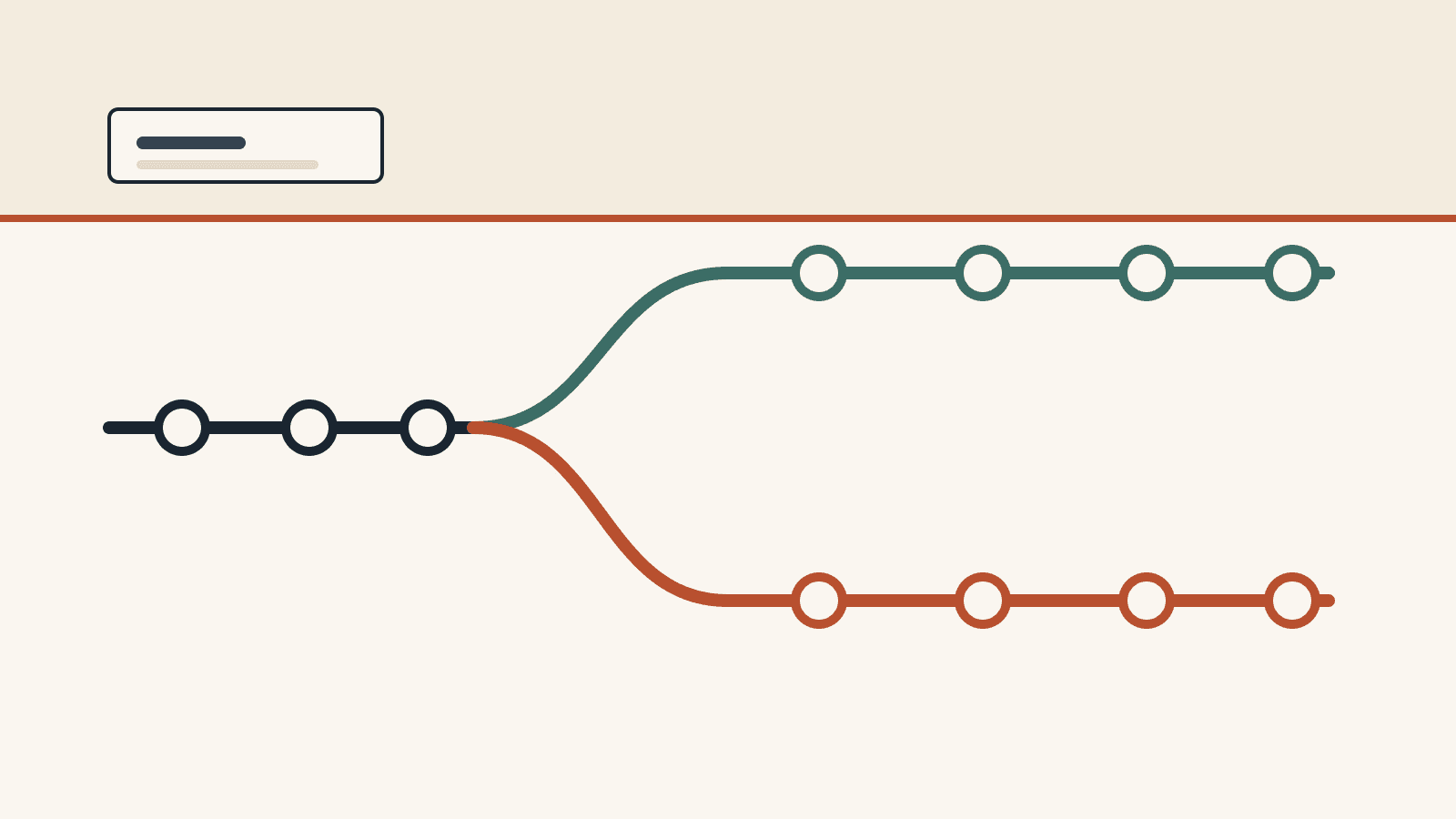
Spain's teleworker route has two application paths: a consular visa lasting up to one year, and a residence authorisation filed from inside Spain lasting up to three years. Being legally in Spain, including on a tourist stay, is only part of the second path's requirements. Your existing permission and qualifying work history still need checking.
The requirements themselves live on our Digital Nomad Visa page. What follows is the doing, in the order you do it, with the door marked at each step.
Key takeawaysLink to this section
- There are two doors: the consulate visa, filed where you live, and the residence authorisation, filed electronically from inside Spain with the UGE-CE. They give you different lengths of permission.
- The income bar is 200% of Spain's minimum wage, and it is measured gross, before any withholding.
- The two documents that sink most files are about the company, not about you: proof it has traded for at least a year, and proof your relationship with it is at least three months old.
- Social security depends on your work type, the applicable agreement and your filing office. Confirm the arrangement before you file.
- Your criminal-record certificate covers the countries you have lived in for the last two years, and you sign a separate declaration covering five.
Am I on the employee route or the freelancer route?Link to this section
You are on the employee route if a company abroad pays you as staff, and on the freelancer route if you invoice clients as a self-employed professional. The forms and the income bar are identical, and so are the criminal-record rules. What differs is what the company has to sign, how you prove the work, and which social-security answer is open to you.
An employee on this permit works for a company outside Spain. A freelancer may also work for companies in Spain, up to 20% of their total professional activity, while keeping the foreign-client relationship that supports the permit. That Spanish work must be professional services, not employment. The limit is explicit in Ley 14/2013, article 74 bis.1 and UGE's FAQ, question 15.
An employee needs a letter from the employer authorising remote work from Spain. Spain's Large Companies Unit (UGE-CE) sets out what that letter has to contain: your role profile, your main functions, an express statement that the job can be done by telematic means, your salary in euros, and the terms of the remote arrangement. Give HR the employer-letter checklist before drafting, so the letter matches the actual job and the instructions of your filing office.
A freelancer proves the same relationship with services contracts instead of an employment contract. The joint instruction issued by the two directorates that run this permit handles the employed and the self-employed variants separately, and the self-employed one expects contracts with the companies you actually invoice.
Some people are both: a salaried job plus two or three invoicing clients. In our experience that is where files stall, because every relationship you name has to carry its own evidence, and it is tempting to name a client whose paperwork you cannot produce.
Do I earn enough, and what counts as income?Link to this section
The published rule is 200% of the Spanish minimum wage for the main applicant, with 75% for the first family member and 25% for each additional member. Our conservative planning amount for one applicant in 2026 is €2,849 a month gross. Confirm the required amount with the office handling your application.
| Household | Monthly planning amount | Per year |
|---|---|---|
| Just you | €2,849 | €34,188 |
| You + 1 family member | €3,917.38 | €47,008.56 |
| You + 2 family members | €4,273.51 | €51,282.12 |
| You + 3 family members | €4,629.64 | €55,555.68 |
The minimum wage is set by royal decree. For 2026, Real Decreto 126/2026 gives a monthly figure of €1,221 and an annual floor of €17,094. Our planning figure doubles the annual floor divided by twelve. The UGE checklist does not explicitly prescribe this division.
Some consulates publish lower amounts: Houston's official page lists €2,442 a month for one applicant in 2026. This example applies to its own consular district. Check your office's amounts, family calculation and evidence before deciding you fall short. Both calculations and their sources are explained here.
The evidence is narrower than people expect. The UGE checklist asks for payslips or invoices covering the three months before you apply, plus a bank certificate in your own name that matches them. A screenshot of a banking app is not a bank certificate. If your income falls short of the bar, bank certificates showing savings or liquid funds can cover the difference, but they have to cover it for the whole length of the authorisation you are asking for, not for a month or two.
If you want to see where your household lands before reading further, check your eligibility in about a minute. It asks for no email address, and it prints the rule behind whatever answer it gives you.
What proves my remote work is real?Link to this section
Two documents do most of the work, and neither of them is about you.
The first is proof that the company has had real, continuing activity for at least a year. In practice that is an official certificate from the mercantile registry where the company is incorporated, or the closest local equivalent. A company incorporated last quarter cannot produce one, and no amount of income makes up for it.
The words "or equivalent" carry a lot of weight for applicants whose countries keep nothing that looks like a Spanish mercantile registry. Plenty of jurisdictions register companies with a state authority, a chamber of commerce or a tax office instead. Ask the company for whatever that authority issues, and expect to say in the covering letter which body issued it and why it is the equivalent. Leaving a reviewer to work that out on their own is how a file comes back with questions.
The second is proof that your relationship with that company started at least three months before you file. For an employee that is the employment contract with its start date; for a freelancer, the services contract with each company named. Three months means three months of relationship, not three months of invoices you sent last week for older work.
A freelancer's contracts are worth a second look before they go in the file. A signed services contract with a start date, a scope and a rate is evidence. A chain of emails agreeing to a project is not, however real the work was. Where a long-standing client has never signed anything, the fix is to sign one now that records when the relationship actually began, and to put the invoice history behind it.
On top of those you assemble:
- The application form. Formulario MIT for the UGE authorisation; the national visa form for the consulate route.
- A copy of your passport, every page of it. For the consulate route it needs at least a year of validity, two blank pages, and to have been issued within the last ten years.
- The fee. Modelo 790 código 038 with proof of payment for the UGE authorisation. The consular visa fee is separate and varies by consulate and nationality, so read your own consulate's sheet rather than a forum post.
- Qualifications: a copy of a degree from a recognised university, vocational training or business school related to the role, or proof of at least three years of professional experience in comparable functions. If your profession is regulated in Spain, you either homologate the qualification or sign a notarised declaration that you will not practise it in Spain.
- A CV. The UGE accepts a simple translation for this one.
Foreign public documents generally need an apostille or legalisation unless an exemption applies. Translation is a separate check: documents already in Spanish normally need none, UGE accepts a simple translation of a CV, and its checklist specifies official alternatives to a MAEC sworn translation for certain documents. Check the document rules and exemptions before ordering either service.
What do I do about social security?Link to this section
You have to show which social-security system will cover your work in Spain. The choices differ for employees and freelancers; an agreement between countries does not establish your individual coverage.
Employees: your foreign employer registers with Spanish Social Security and commits to registering you in the general scheme before work starts. For a visa application from abroad, the joint instruction, section six, also permits proof that the employer has requested registration. If an applicable international agreement covers the work, an issued certificate of applicable legislation may replace Spanish registration. It must expressly cover remote work from Spain; a receipt for requesting the certificate is not enough. Check whether the issuing authority will cover your proposed work, not just whether your country has an agreement.
Freelancers: UGE's current FAQ, question 6, requires RETA and excludes imported bilateral coverage for self-employed applicants. There is an office-specific distinction to check: London's official DNV guidance lists an HMRC A1 route for qualifying self-employed applicants under UK coverage. That is not a promise that UGE will accept your certificate. Confirm the agreement, the issued certificate and the instructions of the office handling your application before relying on foreign coverage.
For the Spanish route, freelancers commit to registering with RETA before starting activity. Employees cannot choose RETA as a substitute for their employer's obligations.
The table records country documents and agreements. It does not decide whether you qualify for a coverage certificate.
| Country | Criminal-record certificate | Authentication, if required | Recorded social-security agreement | Note |
|---|---|---|---|---|
| Argentinacriminal-record source checked 2026-08-26 | Certificado de Antecedentes PenalesRegistro Nacional de Reincidencia | Apostille | Agreement recorded | |
| Australiacriminal-record source checked 2026-08-26 | National Police CertificateAustralian Federal Police | Apostille | Agreement recorded | |
| Brazilcriminal-record source checked 2026-08-26 | Certidão de Antecedentes CriminaisPolícia Federal | Apostille | Agreement recorded | |
| Canadacriminal-record source checked 2026-08-26 | Certified Criminal Record CheckRoyal Canadian Mounted Police | Apostille | Agreement recorded | |
| Colombiacriminal-record source checked 2026-08-26 | Certificado de Antecedentes JudicialesPolicía Nacional de Colombia | Apostille | Agreement recorded | |
| Indiacriminal-record source checked 2026-08-26 | Police Clearance CertificateMinistry of External Affairs, through Passport Seva | Apostille | Not confirmed here | |
| Mexicocriminal-record source checked 2026-08-26 | Constancia de Antecedentes Penales FederalesPrevención y Reinserción Social (OADPRS) | Apostille | Agreement recorded | |
| New Zealandcriminal-record source checked 2026-08-26 | Criminal Record CheckMinistry of Justice | Apostille | Not confirmed here | |
| Nigeriacriminal-record source checked 2026-08-26 | Police Character CertificateNigeria Police Force | Consular legalisation | Not confirmed here | |
| Philippinescriminal-record source checked 2026-08-26 | NBI ClearanceNational Bureau of Investigation | Apostille | Agreement recorded | |
| South Africacriminal-record source checked 2026-08-26 | Police Clearance CertificateSouth African Police Service, Criminal Record Centre | Apostille | Not confirmed here | |
| Türkiyecriminal-record source checked 2026-08-26 | Adli Sicil KaydıMinistry of Justice, through e-Devlet | Apostille | Not confirmed here | |
| United Arab Emiratescriminal-record source checked 2026-08-26 | Certificate of Good ConductMinistry of Interior | Consular legalisation | Not confirmed here | |
| United Kingdomcriminal-record source checked 2026-08-26 | ACRO Police CertificateACRO Criminal Records Office | Apostille | Agreement recorded | The relevant UK instrument is the social-security protocol in the EU-UK Trade and Cooperation Agreement. Certificate eligibility depends on the work and the applicable rules; an agreement is not individual approval. |
| United Statescriminal-record source checked 2026-08-26 | Identity History SummaryFBI, Criminal Justice Information Services Division | Apostille | Agreement recorded | Spain runs several consulates across the United States and each covers a fixed set of states. File with the one that covers where you live, and read its own requirements sheet. New York, for one, accepts only FBI certificates and only if they are under six months old. |
| Anywhere else | the national criminal-record certificate | Confirm for the issuing country | Not confirmed here | Check the issuing country, document and any exemption with your filing office before ordering authentication. |
These are usual routes for documents issued in each country, where authentication is required. Check exemptions and the document type first. An unlisted country does not automatically require legalisation.
An agreement does not guarantee a coverage certificate. Eligibility depends on your work, the issuing authority and your filing office. An unconfirmed entry is not proof that no agreement exists.
Health insurance follows from the same fork. You need public or private cover from an insurer authorised to operate in Spain, active for the whole authorisation, and travel insurance does not qualify. But you do not need a separate policy if you will be registered with Spanish Social Security, or if you hold a coordination certificate that already entitles you to healthcare.
Do I apply at a consulate, or from inside Spain?Link to this section
If you are legally in Spain and meet the other requirements, you can file the residence authorisation electronically with the UGE-CE. A tourist stay can meet the lawful-presence condition; it does not establish eligibility or give permission to work. Applicants who are not resident in Spain can apply abroad for the teleworker visa at the consulate serving their legal residence, under arts. 74 quater and 74 quinquies of Ley 14/2013.
| Consulate visa | UGE residence authorisation | |
|---|---|---|
| Filed | in person, at your consulate | electronically, from inside Spain |
| Location and status | apply abroad as a non-resident of Spain | lawful presence in Spain; existing permission must be checked |
| Work evidence | qualifying prior relationship and all other requirements | qualifying prior relationship and all other requirements |
| Grants | a teleworker visa, up to 1 year | a residence authorisation, up to 3 years |
| Renewal | upgrade to the 3-year authorisation | 2-year periods |
| If they miss the deadline | the statute says nothing | the authorisation is granted by silence |
| Residence card | none needed for the visa itself | apply for a TIE when the authorisation runs over 6 months |
The in-Spain route can grant three years in one decision; the consular route can grant a year, followed by an application for residence in Spain. Choose the route only after checking your current permission and work history. Arrange the evidence before relying on a tourist stay as a filing opportunity.
Filing from inside Spain has one property worth understanding: Ley 14/2013 art. 76.1 extends the validity of your current residence or stay until the application is resolved. Filing does not itself authorise a tourist or Non-Lucrative resident to start working.
That article also sets the UGE's clock at twenty days from electronic filing, and says that if the file is not resolved in time the authorisation is understood to be granted. Spanish administrative deadlines are counted in working days unless a norm says otherwise, so read it as roughly twenty working days, with approval by silence at the end of it.
The consular clock works differently, and it gets misquoted constantly. Ley 14/2013 art. 75.5 says visa applications are to be resolved and notified within ten working days. That is a deadline the consulate owes you, and it is not a forecast of when your visa turns up. The same article removes it where the applicant falls under the prior consultation of art. 22 of the Visa Code, in which case the Visa Code's own period governs instead. And Spain's own consulate pages, such as the one for Bogotá, state the period alongside the caveat that it can be extended when additional documents or an interview are requested. What none of them says is what happens if the consulate runs past the ten days. Art. 76.1 puts approval by silence into the in-Spain route in plain words; art. 75 contains no equivalent sentence, so do not count on silence deciding a consular file either way.
Two more limits sit on that number. It starts the day after you file, so it says nothing at all about how long you wait for the appointment beforehand, which is where most of the real waiting lives. And not every consulate publishes it: the Santiago de Chile teleworker sheet gives the UGE's twenty days and no consular deadline at all. The number belongs to the law and to the ministry pages that carry it, not to whichever consulate you happen to be booked at. If you want the whole calendar rather than this one stage, our timeline guide lays out every window with our own estimates marked as estimates.
What actually happens on filing day?Link to this section
On the UGE route, filing day is a browser tab. You submit the Formulario MIT electronically with the file attached, including the paid 790/038 receipt, and the twenty-day clock starts from that submission. Nobody looks you in the eye, which means the file has to explain itself.
On the consulate route, filing day is an appointment you booked weeks or months earlier, and you appear in person. Bring the originals of everything you are submitting as copies, and bring your own copy of the checklist your consulate publishes, because consulates add local requirements: extra photographs, additional identity copies, proof of residence in the consular district.
You provide criminal-record certificates from the countries you have lived in during the last two years, with authentication and translation where required, and sign a responsible declaration covering the last five years. On the consulate route the certificate applies from age 18. UGE's checklist exempts a holder of a Spanish residence or stay authorisation of more than six months when the certificate was already supplied to obtain that authorisation; holding the permit alone does not establish this exception. Confirm the requirements for your filing office.
The UGE checklist does not specify a universal maximum issue age for this certificate. Confirm the rule for your document and filing office, especially for a consular application. Schedule any required authentication and translation within that period; do not replace a certificate solely because it is more than 90 days old.
If either office comes back asking for something more, answer it quickly and completely. That request is what the extension in the ministry's own wording refers to, and a half answer buys a second request rather than a decision. Keep the whole file, in the version you submitted, somewhere you can reach it from a phone.
Family members join by filing their own identity documents, relationship certificates such as a marriage or birth certificate, and proof of dependence for adult children or ascendants, on top of the household income shown above. Check authentication, translation and any applicable exemption for each relationship document.
What happens after they say yes?Link to this section
On the consulate route the consulate issues a teleworker visa valid for a maximum of one year, and that visa is by itself enough to live in Spain and work remotely. The law says so directly: art. 75.4 states the visa authorises residence without your having to obtain a foreigner identity card. You have one month from being notified of a favourable decision to collect the visa, and a file left uncollected is closed as withdrawn.
Then, in the sixty calendar days before that visa expires, you apply from inside Spain for the three-year residence authorisation. People forget this step, and forgetting it turns a straightforward upgrade into a much harder problem.
On the UGE route the unit grants the residence authorisation directly, for up to three years, renewable in two-year periods. Because it runs longer than six months, you apply in person for the TIE, the foreigner identity card, once it is granted.
What if I already hold Non-Lucrative residence?Link to this section
UGE's current FAQ, question 13, answers no to an existing Non-Lucrative resident applying as a teleworker. That permit prohibits work, so remote work performed under it cannot establish the prior work history. The Digital Nomad rules require a qualifying relationship during at least the three months before application; lawful presence alone does not answer that requirement.
Have your permit, dates and locations of work reviewed before choosing a route. RD 1155/2024, art. 191, provides separate general-regime modifications to employed or self-employed work, with conditions depending on your residence history. Those are not an automatic NLV-to-Digital-Nomad switch. Do not start working on an NLV to build the three months of evidence.
Existing-residence guidance checked on 14 September 2026.
Can my spouse or partner work in Spain?Link to this section
Yes. A spouse or partner granted a family residence authorisation on the Digital Nomad route may work in Spain as an employee or as a self-employed professional. UGE's FAQ, question 18, confirms these work rights. The principal teleworker's foreign-employer and Spanish-client restrictions do not describe the family member's work permission. For who can apply and how to prepare the relationship evidence, read bringing your family on the Digital Nomad route.
Work-rights answers corrected and checked on 14 September 2026. An earlier version incorrectly said that family work rights and the freelancer's Spanish-client limit could not be sourced.
Social-security guidance corrected on 14 September 2026 to distinguish employees, freelancers, UGE guidance and published consular certificate routes. Country agreements do not establish individual coverage.