The employer letter for Spain's Digital Nomad Visa: what it needs to say
Plain Spain · · 4 min read
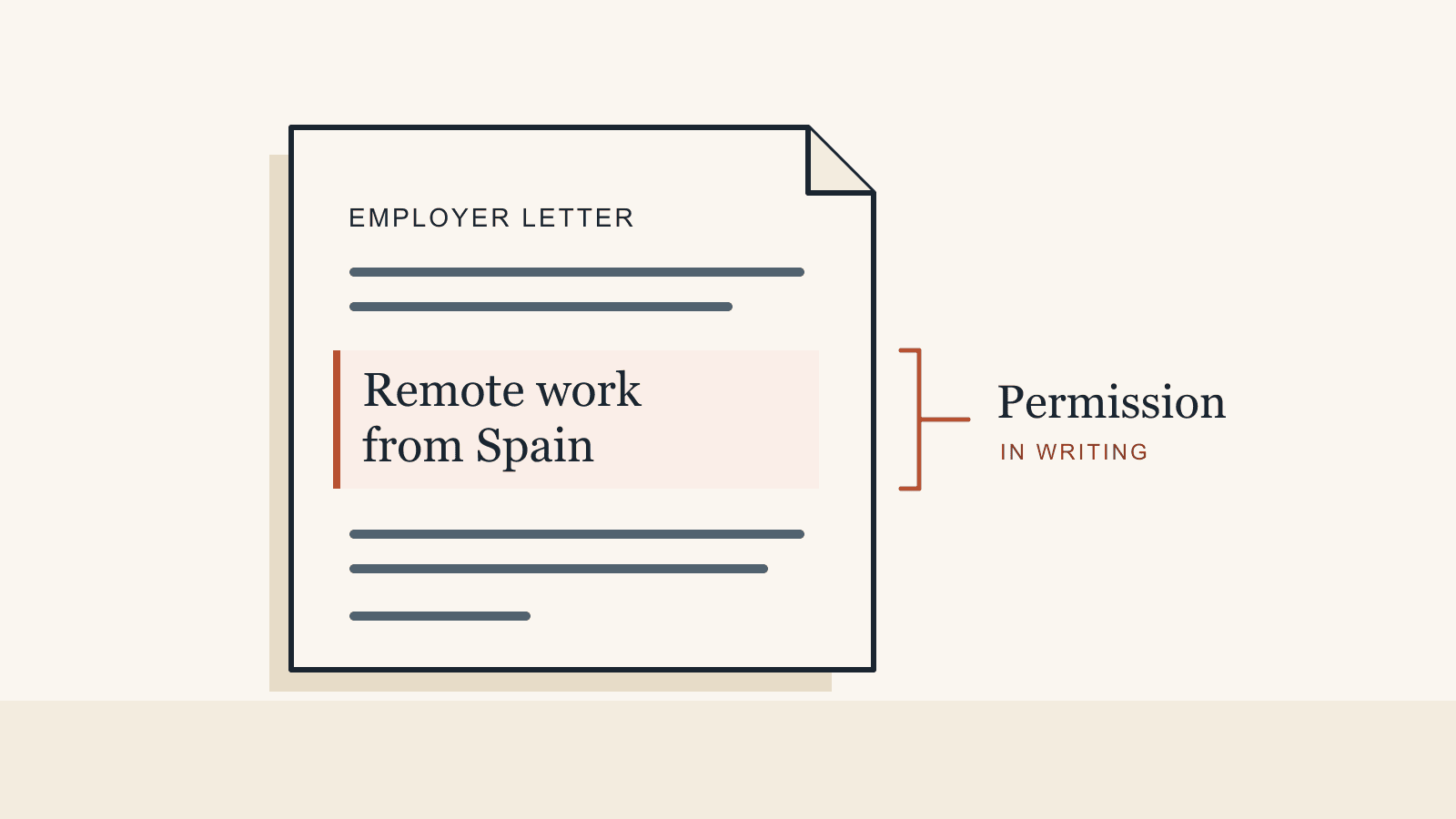
A contract can describe your job as remote and still leave a question unanswered: has your employer agreed to you doing that job from Spain?
For an employed applicant on Spain's Digital Nomad Visa route, the company's letter needs to make that permission explicit and explain the work arrangement. UGE, which handles residence applications inside Spain, publishes the details it expects. The consular visa procedure also has its own checklist. Send the relevant instructions to HR before anyone starts drafting.
Give HR a specific requestLink to this section
The UGE checklist for the principal applicant asks the foreign company's letter to establish:
- Permission to carry out the work from Spain.
- Your job profile and main duties.
- An express statement that the work can be performed using telecommunications and computer systems.
- The salary to be received, expressed in euros.
- The other conditions under which you will work remotely.
The consular instructions may package those facts differently. Spain's embassy in New Delhi, for example, asks for a company certificate showing the prior employment relationship, contract duration, explicit permission to work remotely in Spain and salary. Follow your filing office's list when assembling the final document.
As a practical drafting step, ask for a dated letter on company stationery with the signer's name, role and contact details. Spell out the employing company's legal name as it appears in your contract. If HR uses a group brand on its letterhead, the text should still identify the entity that employs you.
If your contractual salary is paid in another currency, keep that fact visible alongside the euro amount and explain the calculation. Check the conversion basis for your application; the letter should not silently rewrite the currency in your employment contract.
Describe the actual workLink to this section
Name the tasks you actually perform. For a software tester, an illustrative description might read: “The role involves testing software, documenting defects and discussing releases through the company's online systems. These duties can be performed entirely from Spain without attendance at the company's premises.” This is an example to adapt only if true, not an official form of wording.
A manager who regularly supervises work on a factory floor has a different question to resolve, even if the company allows occasional days at home. UGE's FAQ on remote duties says the role must be capable of being performed exclusively through the relevant remote systems, and it can ask for information about the business and its structure.
Be equally clear about duration. If the company agrees to a limited period in Spain, give the actual dates or terms. Ask the employer to resolve any conflict between that permission and a contract clause requiring you to work in another country before the documents are signed.
Put the letter beside the other evidenceLink to this section
The letter is one part of the file. UGE separately asks for the employment contract establishing the required prior relationship, an official company-register document or equivalent showing at least a year of real business activity, and recent earnings with matching bank evidence. Read those documents together. UGE principal-applicant checklist.
The New Delhi consular checklist expressly requires evidence of at least three months working for the foreign company before the visa application. A newly signed permission letter can confirm an existing job; it does not create three months of employment history. New Delhi's employment-evidence requirement.
Before translating anything, compare the company names, your start date, job title, salary and contract end date across the documents. If a promotion or pay rise explains a difference, include the document recording it. A short explanation attached to the relevant evidence is more useful than leaving the reader to guess.
Permission to move leaves Social Security to settleLink to this section
Your employer agreeing to the location does not establish which Social Security system covers the work. For an employee, UGE describes Spanish employer registration or qualifying coverage under an applicable international agreement. The foreign authority must issue the relevant coverage evidence; HR cannot create it in the permission letter. UGE FAQ, question 6.
There is a route-specific detail worth sending to whoever handles payroll. On the Spanish registration route, UGE asks for the employer's registration and its commitment to register the employee before work begins. For a consular visa application made outside Spain, section six of the joint instruction allows evidence of the employer's registration request. Confirm which evidence your filing route requires before relying on a request receipt.
That exception concerns Spanish employer registration. UGE's checklist does not accept a mere application for the foreign coverage certificate in place of the issued document.
The application guide sets out the remaining evidence. Give HR and payroll both questions at the outset: whether the company authorises the work from Spain, and how it will meet the applicable Social Security obligations. If either answer is still unclear, send us the proposed arrangement and where you plan to apply before commissioning translations.