NIE and TIE in Spain: the number, the card and your next step
Plain Spain · · 3 min read
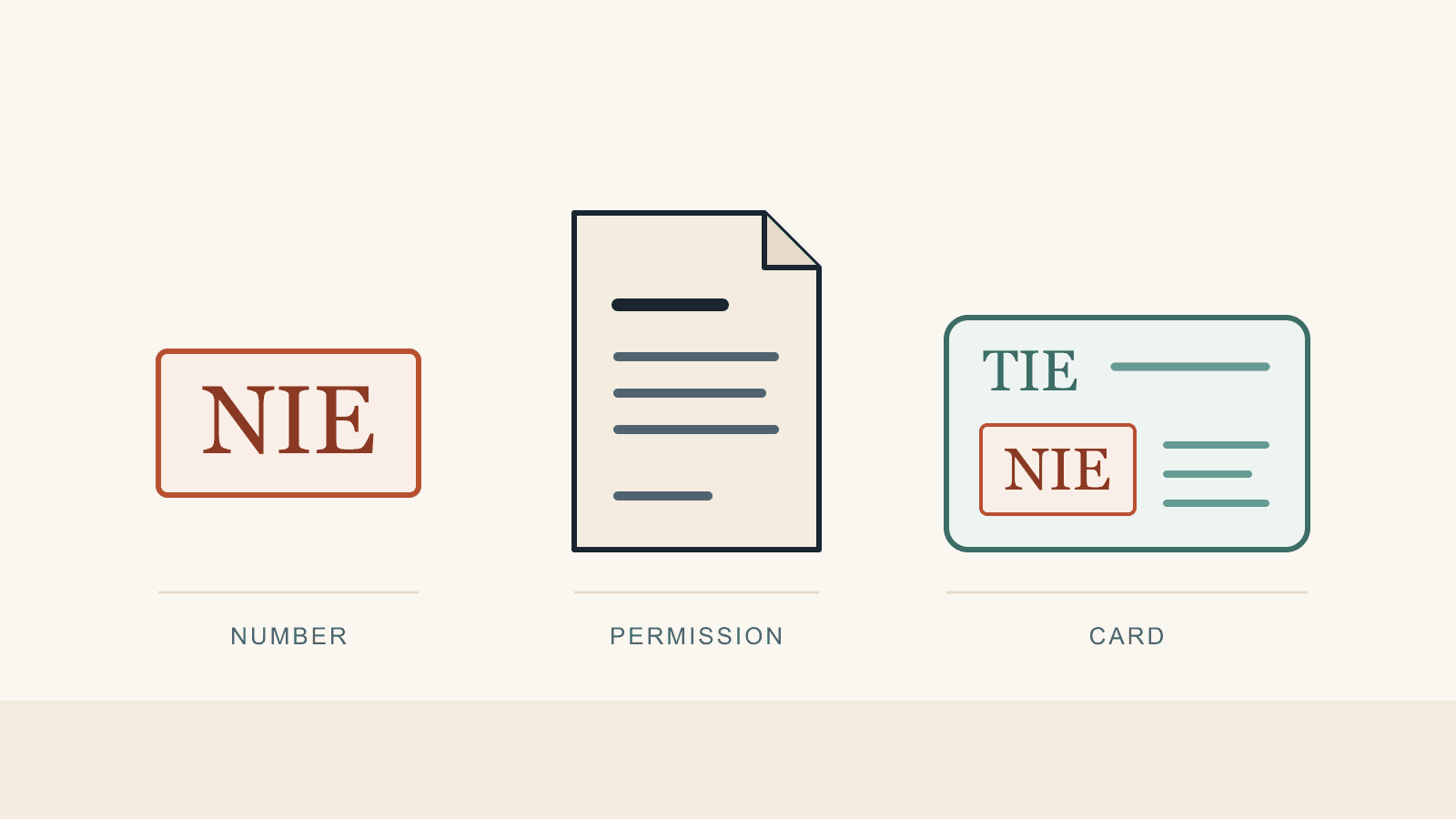
An NIE is a number. A TIE is a physical card recording your immigration status. You can have the number before you have permission to live in Spain, so “I have my NIE” does not tell you whether the residence paperwork is finished.
The next step depends on what you have been granted. A Non-Lucrative Visa and a Digital Nomad Visa do not have identical rules for the card. Check the permission first, then book the procedure that follows from it.
What each document establishesLink to this section
| Item | What it does |
|---|---|
| NIE, Número de Identidad de Extranjero | Identifies you in Spanish administrative records. Assignment of the number does not grant residence permission. |
| TIE, Tarjeta de Identidad de Extranjero | Documents your authorised immigration status. It has a validity period tied to the permission behind it. |
| Passport | Establishes your identity and nationality. The TIE does not replace it. |
These distinctions are set out in Interior's NIE guidance, its TIE guidance and the consular explanation of what an NIE does not prove.
If someone asks for your “NIE card”, clarify whether they need the number or a copy of a document showing it. Those are different requests. Before you arrange a new appointment, look at the visa, decision or certificate you already have.
Do you need a TIE after approval?Link to this section
If you entered with a Non-Lucrative Visa: apply personally for the TIE within one month of entering Spain. That is the rule in article 63.5 of Royal Decree 1155/2024. Receiving an NIE during the visa process does not complete the card application.
If a consulate issued your Digital Nomad Visa: the visa itself permits residence during its validity without a mandatory TIE. This exception is explicit in article 75.4 of Ley 14/2013. A checklist written for a different residence route can send you looking for a card you are not required to obtain.
If UGE granted your Digital Nomad residence authorisation: you must apply for the TIE when the authorisation lasts more than six months. That is a different provision, article 76.2. Check the grant notice and any conditions affecting when the authorisation takes effect. Interior's general guidance gives a one-month application window from the relevant grant or effective date for this situation.
The consular visa and the UGE authorisation are often both called a “Digital Nomad Visa” in conversation. Use the name on your actual document when checking what follows approval.
Book the card procedure when that is what you needLink to this section
The official card application is form EX-17. It has a field for your existing NIE. You are applying for a document showing your status, not asking to be assigned another number.
Interior directs applicants to apply personally at the relevant National Police documentation unit in their province of residence, using the official appointment service linked from its TIE page. Read the procedure's instructions before confirming an appointment. An appointment for assigning an NIE is a different task.
Prepare the completed form, passport, current photograph and applicable fee receipt. Check the full police list for your situation, including the grant decision for a Ley 14/2013 authorisation and any required entry or Social Security evidence. Keep the appointment instructions with the documents so you can check them again before attending.
If you are still preparing a consular visa application, do not assume everyone needs a separate NIE appointment first. New Delhi's Digital Nomad instructions ask for the NIE before applying; Bogotá's ask for it at the same time. Follow the office handling your application.
The number stays; documents can expireLink to this section
The NIE itself does not expire. A current certificate of the information attached to it may still be requested, as the Spanish embassy in Dublin explains. That is different from renewing residence permission or replacing a card.
Keep the permission's expiry date in your calendar even though the identifying number remains the same. When preparing a renewal, establish which residence authorisation you are renewing; booking a card appointment alone does not renew that permission.
Your town hall's padrón is another record again: it concerns where you live. Registration does not establish lawful immigration residence, as article 18.2 of Ley 7/1985 makes clear. Keep it with your address documents rather than treating it as an alternative to your visa or authorisation.
For the wider arrival sequence, use the moving-to-Spain checklist. If you cannot identify which procedure your approval requires, tell us the name of the permission and what the notice says.