How long a Spain visa really takes: every stage, with realistic ranges
Plain Spain editorial team · Last reviewed · 11 min read
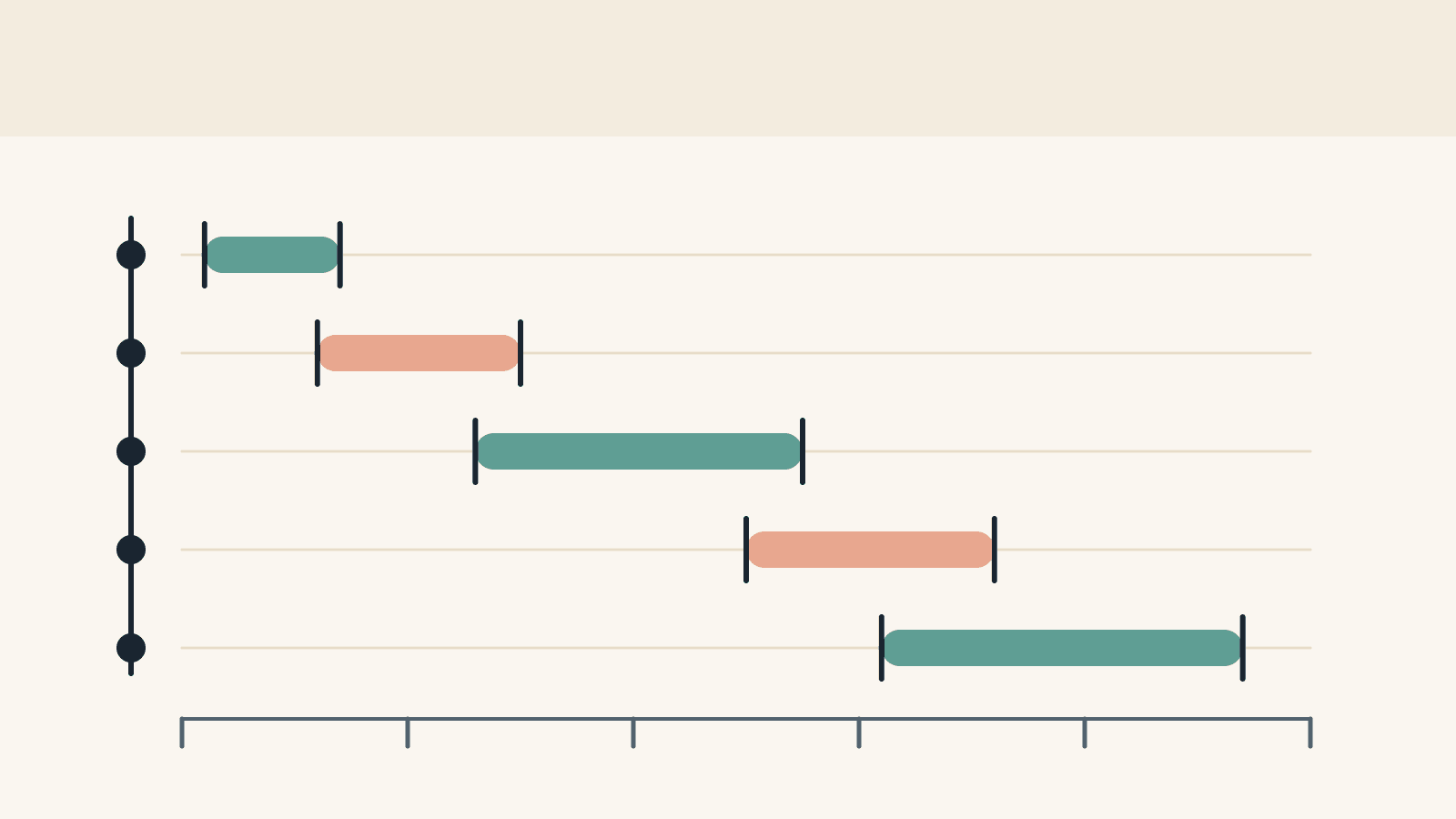
Most of a Spain visa is spent waiting for paper you have to chase yourself, not waiting for an official to decide. That is the part worth knowing before you book a flight or hand in your notice: the stages the law puts a clock on are the short ones, and the stages nobody puts a clock on are where the months go.
The stages below run in the order you meet them. Where a deadline is fixed by statute, it is linked to the law that fixes it, and where a number is ours, it is labelled an estimate. If you want the requirements rather than the schedule, they sit on the Non-Lucrative Visa page.
Key takeawaysLink to this section
- In our experience, two to four months from the first email to the visa in your passport is a realistic plan for the Non-Lucrative Visa.
- Document gathering is the longest stage and the one you control. Our estimate is two to six weeks, and it is where applications slip.
- The appointment wait belongs to your consulate, varies from consulate to consulate, and sits outside every legal deadline on this page.
- Silence means opposite things on different routes. On the Non-Lucrative residence authorization, an unanswered month is a refusal. At the Digital Nomad unit inside Spain, an unanswered deadline is an approval.
- Certificates expire while you wait. A criminal record and a medical certificate obtained too early can go stale before your appointment arrives.
How long does a Spain visa take from start to finish?Link to this section
In our experience, two to four months from your first email to the visa in your passport, with the Digital Nomad route filed inside Spain often finishing faster than that and the Non-Lucrative route rarely beating it. The honest version of the answer is a table, because the stages are not the same kind of number: some are fixed by statute, some are set by your consulate, and some are our own estimates from doing this repeatedly. The third column says which kind each number is, because a statutory deadline and an estimate of ours are not the same claim and should not be read as one. The five rules a number has to survive before we publish it are written down, so you can hold us to them.
| Stage | How long | What kind of number this is |
|---|---|---|
| Gathering documents | 2 to 6 weeks | Our estimate |
| Apostille or legalisation | Depends on the authority that issues it in your country | No general figure exists, because the issuing authority sets its own pace |
| Sworn translation | 1 to 2 weeks | Our estimate |
| Waiting for a consulate appointment | Weeks to months, consulate by consulate | Your consulate's, published only in its own booking system |
| Non-Lucrative residence authorization | Maximum one month, and silence is a refusal | Statutory |
| Non-Lucrative visa decision | Legal period of three months from the day after filing | Statutory, extendable |
| Digital Nomad authorization at the UGE | About 20 working days, and silence means granted | Statutory |
| Digital Nomad visa at the consulate | A deadline the consulate owes, not a forecast of your case | Statutory, with two escapes (see below) |
| Collecting the visa | One month from notification; some consulates allow two | Statutory |
| Applying for the residence card after arrival | Within one month of entering Spain, on the Non-Lucrative route | Statutory |
Add those up and the legal windows account for a minority of the wait. The rest is you, your issuing authorities, your translator, and a booking calendar.
How long does gathering documents take?Link to this section
Two to six weeks, in our experience, and the spread is almost entirely about how many countries you have lived in. One country of residence and a passport issued last year is the fast end. Three countries in the last five years, a marriage certificate held abroad and a pension provider that answers by post is the slow end.
The Non-Lucrative Visa asks for a criminal record certificate from every country you have lived in during the previous five years, which is written into art. 38.e of Royal Decree 1155/2024. The Digital Nomad Visa asks for the last two years, plus a signed declaration covering five, under art. 62.3.c of Law 14/2013. People routinely underestimate this: a year abroad you had half forgotten becomes a certificate request to a police force in another time zone, and that single document can set the whole schedule.
Freshness is the other trap, and it runs the opposite way to instinct. Certificates have a maximum age at filing, not a minimum, so starting too early is a real failure mode. The ceiling is the consulate's to set: Casablanca caps the criminal record and the medical certificate at three months, New York allows an FBI certificate six. Use the period your filing office actually accepts when scheduling the certificate, any required authentication and translation. Three calendar months and 90 days can end on different dates. An older document may still be accepted, so confirm the rule before paying for a replacement.
How long do apostilles and sworn translations take?Link to this section
Sworn translations run one to two weeks, in our experience. Apostilles have no worldwide figure. The stamp is put on by the authority your own country designated to issue it, and that authority sets its own pace. Some hand it back over a counter the same morning. Others take submissions by post and return them the same way.
Get your own number instead of looking for a general one. Before you fix an appointment date, ask the issuing authority three things: how it accepts documents, what turnaround it currently quotes, and whether it posts the document back to you. That is one phone call or one page on its website, and it turns the one stage nobody can generalise into a number you actually hold. Nobody can look it up on your behalf, because it is published nowhere central.
The translation is the stage you can shorten, because sworn translators work a booking queue and take it in order. Tell yours which week your apostilled document is expected rather than ringing on the day it lands. Holding a slot for a document that is still in the post costs nothing, while a document that turns up behind three other jobs costs you a week.
Both steps sit between the certificate being issued and the file being handed in, which means they eat the freshness window from the inside. A criminal record issued the day you start, an apostille that takes a month and a translation that takes a fortnight reaches the counter with half of its ninety days already spent. Run that arithmetic before you order anything.
Confirm whether each document needs authentication or translation before booking those services. Documents already in Spanish and some treaty-covered documents can avoid translation. Where an official translation is required, the Foreign Ministry lists recognised routes, including MAEC sworn translators and specified alternatives. The document guide explains the conditions and sequence.
How long is the wait for a consulate appointment?Link to this section
Nobody can give you a number that holds, and that includes us. The wait is set by one consulate, it moves through the year, and no ministry publishes a figure you can compare between posts. In our experience it runs from a couple of weeks to several months depending on the consulate. We will not average that, because an average across consulates would describe nobody's case.
Two things follow from that. Check your own consulate's booking system before you plan anything else, because the first available date is the fact your whole schedule hangs on. And treat the appointment as the anchor: the confirmed certificate age limits, any required translations and the insurance start date determine when each document should be ready.
What deadlines does the law fix on the Non-Lucrative Visa?Link to this section
None of them start until your file is in, which is why they are the short half of the wait. The residence authorization is decided within a maximum of one month from the day the immigration office receives the consulate's communication, and if that month passes with no answer the law treats the silence as a refusal. That is art. 63.4 of Royal Decree 1155/2024, also stated on the Ministry's own Non-Lucrative residence sheet. It is the only deadline on this page where silence works against you.
The visa itself has a legal period of three months from the day after you file, which the consulate may extend if it asks for further documents or calls you for an interview. The New York consulate publishes that period, and Casablanca's sheet says the same in round terms. Once a favourable authorization comes back from Spain, art. 39.5 of the regulation gives the consulate at most one further month to resolve and issue the visa.
Then the file waits on you. You have one month from notification to collect the visa in person, or the application is closed as withdrawn under art. 28.4 of the same regulation. Some consulates are more generous, and the Casablanca sheet gives two months, but plan for one. After you land, the residence card is a separate deadline again: art. 63.5 gives you one month from entering Spain to apply in person for the TIE, the foreigner identity card.
How fast is the Digital Nomad Visa?Link to this section
Faster on paper, and genuinely faster in one case: filed from inside Spain with the UGE, the large-companies and strategic-groups unit, the residence authorization has a decision period of about 20 working days and silence at the end of it means granted. The period is in art. 76.1 of Law 14/2013, which says twenty days from the electronic filing and that an unresolved application is understood to be approved. The statute says days rather than working days; Law 39/2015 art. 30.2 is why they are counted as working days. Requirements for that route are on the Digital Nomad Visa page.
The consular route has a deadline too, and its shape matters more than its length. Art. 75.5 of Law 14/2013 requires visa applications to be resolved and notified within ten working days from the day after filing. Two escapes are written into the same texts: the deadline does not bind where your application goes through the prior consultation of art. 22 of the Visa Code, in which case the Code's own period applies, and the Ministry's own consulate pages, the Bogotá teleworker page among them, add that the period may be extended when they ask for more documents or call you for an interview.
So read it as a deadline the consulate owes, not as a forecast of how long your case takes. It starts the day after filing, which means it says nothing about the appointment wait in front of it, and not every consulate publishes the figure at all. We do not publish a claim about how often consulates run past it, because we have not found a source that measures it.
Which mistakes cost the most calendar time?Link to this section
The expensive failures are often the ones that send a document back to its issuing authority. Where authentication and translation are required, arrange the authentication before the final translation so it can include the necessary stamps and attachments.
- A country of residence nobody counted. That can mean another certificate request and any required authentication and translation while the other documents sit ready. The Non-Lucrative route's five-year window is where these surface.
- A certificate that went stale. Ordering early buys nothing, it just moves the expiry closer to your appointment, and when the appointment moves the criminal record and the medical certificate both restart at their issuing authorities.
- A required authentication added after translation. The translation may need extending to cover the new page; confirm the receiving office's requirements before commissioning it.
- Income evidence that does not agree with itself. Statements, bank certificates and tax filings naming different amounts or different account holders draw a request for more documents, and that request extends the deadlines above rather than pausing anything you have already arranged around them.
Each of these is visible weeks before it costs you anything, which is the only reason to list them, and each is how a two-month case becomes a four-month one.
When should I start?Link to this section
Work backwards from the date you want to be living in Spain, and give yourself four months for a Non-Lucrative application. Book or check the consulate appointment first, because that date sets everything else. Request certificates from other countries next, since they have the longest and least predictable lead times. Then the documents with a maximum age, timed to land inside the 90-day window before filing. Translations last, after the apostilles.
If your date is fixed by something you cannot move, a lease ending or a school year or a job start, that is exactly the case to talk through before you spend money on documents. Tell us the deadline you are working to and we will tell you whether it is realistic, including when the answer is that it is not.
Two guides go deeper on the stages this one only sequences: how to apply for the Non-Lucrative Visa walks the forms and the filing itself, and how to apply for the Digital Nomad Visa covers the employee and freelancer routes and the choice between filing in Spain and filing at a consulate.